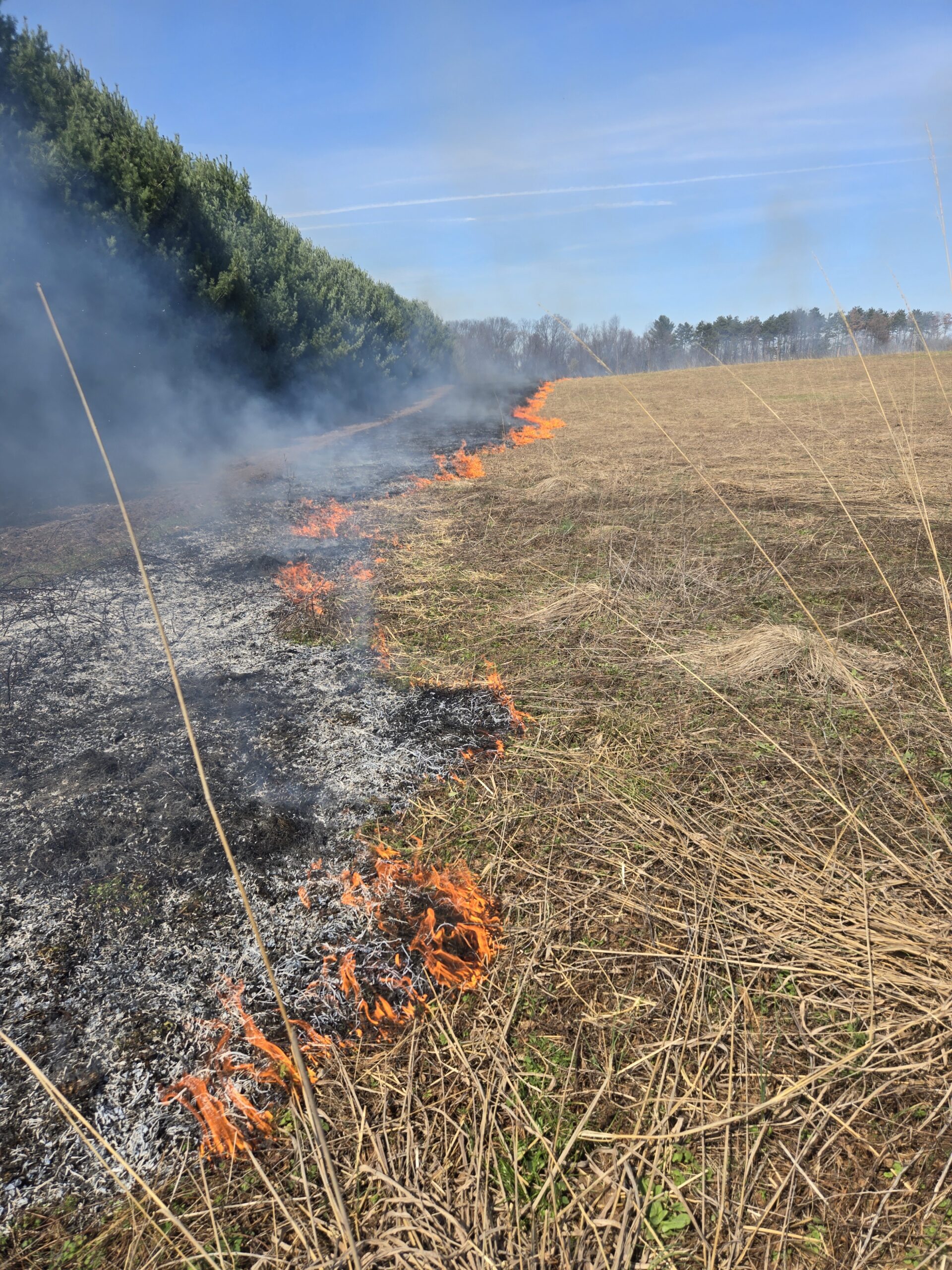
7 Benefits of Controlled Burns on Grasslands

Fire can be the impetus for rejuvenation of an overgrown field. This article will discuss the benefits of controlled burns on grasslands used for wildlife habitat or grazing. Considerations for planning a controlled burn are also included.
This post contains affiliate links. As an Amazon Associate, I earn from qualifying purchases.
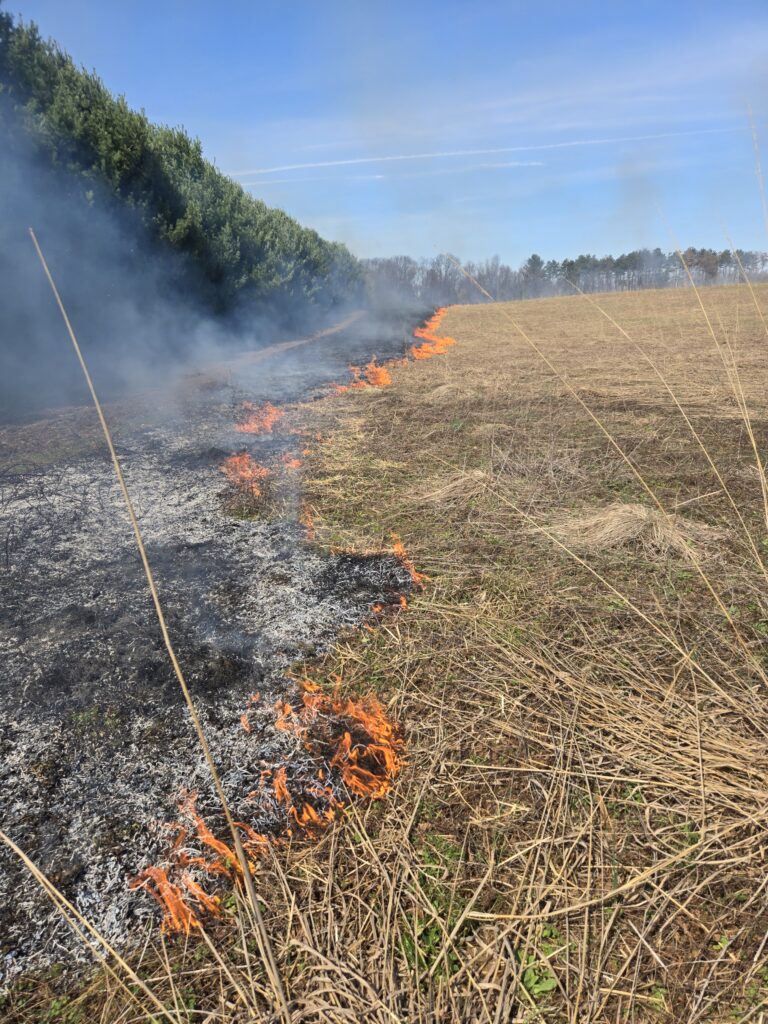
Last week we completed our fourth controlled burn on a 30-acre plot of our property. This field had been cropped for decades and traditional farming methods left it depleted and prone to erosion from the wind and rain.
In an effort to rejuvenate the land, we enrolled this parcel in a Conservation Reserve Program (CRP) through the United States Department of Agriculture. The first program we were involved with targeted pollinators, so we planted an array of native grasses and wildflowers. Currently, the field is in a grassland CRP with a focus on maintaining a prairie for wildlife habitat but allowing for some forage use for grazing our livestock.
One of the ways that we manage our CRP and keep it healthy is by conducting periodic controlled burns on the field.
What is a Controlled Burn?
A controlled burn, or prescribed fire, is one that is purposely lit to restore an ecosystem. Our burns are planned by a professional and approved by the Farm Service Agency. They are conducted at a specified time and only under approved weather conditions.
We live in southwest Michigan and burn in the early spring when there is dry, dead forage present from last year, minimal new growth, and wildlife have yet to start rearing their young.
A controlled burn is a fun and rewarding practice to implement and it is amazing to see the impact the fire has on the land! Here are some of the benefits we have observed from burning our field over the past 15 years.
1. Controlled Burns on Grasslands Help Reduce Invasive Species
One of the benefits of a controlled burn on a grassland is that it can help get rid of invasive species. For our property, our biggest issue is autumn olive. The good news is that this scrubby bush is not fire resistant.
While the fire burns away species that are not fire adapted, it gives the native plants a chance to grow and flourish again. The deep root system of native grasses, extending five to fifteen feet underground, is not harmed by the fire on the surface and starts growing back almost immediately.
2. Controlled Burns on Grasslands Recycle Nutrients in the Soil
Burning the organic matter on the surface of the land releases nutrients that enrich the soil. The charred plant matter acts as a natural fertilizer encouraging new plant growth.
The charcoal that is produced adds carbon to the soil and with its alkaline pH, can reduce the acidity of sandy soils like we have on our property.
3. Controlled Burns on Grasslands Promote Biodiversity
Controlled burns on grasslands can help promote biodiversity in both the plants and wildlife. As bushes and trees react slower to the insult of the fire, grasses and flowers have a chance to take root and access the sun and available nutrients.
A wide variety of plants provides food and shelter for a wide variety of animals. Numerous white-tailed deer, turkeys, coyotes, rabbits, snakes, turtles, butterflies, honey bees, and wild birds call our CRP field home.
4. Controlled Burns on Grasslands Increase Forage Quality
The new growth that occurs three to six months after a burn is more nutritious for animals to consume. According to Wanchuk, et al. (2024), prescribed fire had a positive effect on the mineral content of vegetation grown post-burn with the potential to reduce supplementation and improve growth and performance.
Not only is post-burn fodder more nutritious, it is also more palatable for livestock and wildlife. We use our portable, solar-powered fencing to rotationally graze our goats on our CRP field in the summer. Since the goats gobble up the new growth, we wait until the grass reaches a height of at least six inches and keep them moving so the area doesn’t become overgrazed.
5. Controlled Burns on Grasslands Reduce Pests
Conducing a controlled burn can also be a helpful, yet short-term management strategy for pests like ticks and horn flies. Ticks are a big problem in the spring on our farm. It’s great that the fire kills a lot of them and gets rid of their habitat, at least for a little while!
Interestingly, Scasta, et al. (2012), reported a reduction in horn flies on cattle in pastures where patch burns took place.
6. Controlled Burns on Grasslands are Cost Effective
Like anything else, maintaining a grassland takes work and the investment of some time and money. The northern border of our CRP is a deciduous forest. We are constantly battling saplings that want to grow and take over our prairie in that area.
Periodic burning is a cost-effective means of managing brush when compared to mechanically cutting or spraying with chemicals. We save money by hiring one professional to oversee our burn and providing our own fuel for the fire and manpower to monitor it.
7. Controlled Burns on Grasslands are Efficient
A controlled burn is both an effective and efficient means of maintaining a grassland. Surprisingly, a burn doesn’t take that much time to complete. It only takes us around three hours to complete a burn on our 30-acre field. When compared to mowing that same area, there is a huge time savings.
If you want to maximize the positive effects on your land and environment, while simultaneously minimizing damage and time on task, fire is the way to go.
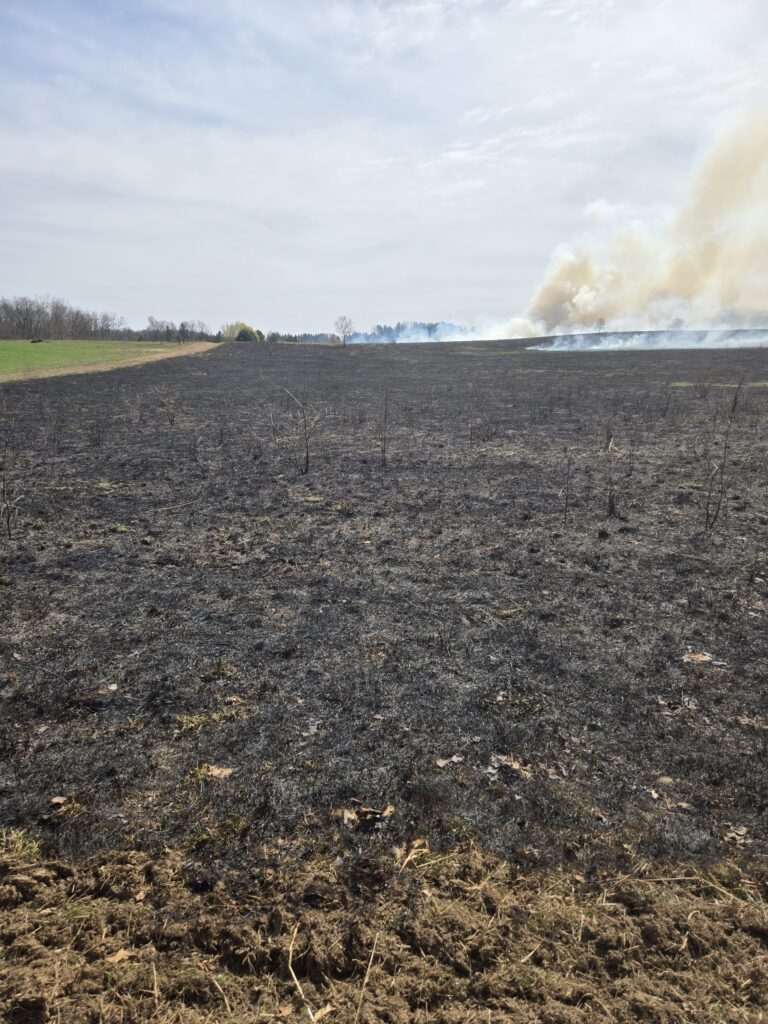
Considerations for Controlled Burns on Grasslands
I just got done telling you all the reasons you should opt for managing your grassland with a controlled burn, but there are a few things to consider before you jump into this practice. It is important to realize that there is potential risk for humans, animals, and property when you light a fire.
To minimize risk, work with a professional, notify the fire department that you are planning a burn, have them assess the field and weather the day of, and get approval before starting.
Create fire breaks by discing a perimeter around your field that the fire cannot cross. The fire will need fuel to move, and upturned dirt is an effective deterrent. This is especially important on the western edge of our field where we have a pine windbreak. To learn more about windbreaks for CRP fields and farms, click here to read my other article.
Have plenty of helping hands available to monitor the fire and carry water and rakes that can be used to put out flames as needed.
Have a clear plan and communicate it with all members of the group. Make safety the number one priority of the burn.
References:
Scasta, J.D., Engle, D.M., Talley, J.L., Weir, J.R., Stansberry, J.C., Fuhlendorf, S.D., and Harr, R.N. (2012). Pyric-herbivory to manage horn flies on cattle. Southwestern Entomologist, 37(3): 325-334. doi:10.3958/059.037.0308
Wanchuk, M.R., McGranahan, D.A., Sedivec, K.K., Swanson, K.C., and Hovick, T.J. (2024). Prescribed fire increases forage mineral content in grazed rangeland. Journal of Wildland Fire, 33, 1-9. doi: 10.1071/WF24009