How to Use a Goat Cut Sheet

This post explains the best way we have found to organize and plan for butchering on our family farm. Planning ahead ensures the cuts are just how we like them and that as little of the animal is wasted as possible. Use this example goat cut sheet to ensure the butchering process is a smooth one from start to finish.
This post contains affiliate links. As an Amazon Associate, I earn from qualifying purchases.
If you follow our family farm, you know much of what we eat comes directly from our 40 acres. From the vegetables and herbs we grow in the garden, to wild game and foraged berries, to the livestock we raise, it is truly farm-to-table and the benefits are countless. We know exactly where our food comes from, our children learn valuable life skills, and we enjoy fresh, nutritious meals year-round.
Home butchering is an important part of that process. While it may seem intimidating at first, it is far more approachable than many people realize. In this post, I want to introduce you to our goat cut sheet and explain why using one can improve the butchering process for any animal.
Home Butchering
My introduction to butchering came through hunting. Growing up, we processed our own deer and often relied more on experience than a formal plan. We did a good job, but over the years my techniques evolved through research, practice, and experimentation. Those processing days were more than just work—they were gatherings with friends and family, celebrating a successful harvest and filling the freezer with food.
As we began raising livestock, our approach became more intentional. Instead of ending up with miscellaneous roasts and steaks, we started planning specific cuts around the meals we wanted to prepare. Along the way, we experimented with different techniques, kept what worked, and abandoned what did not. That process helped us discover new favorite dishes, make better use of the carcass, and minimize waste.
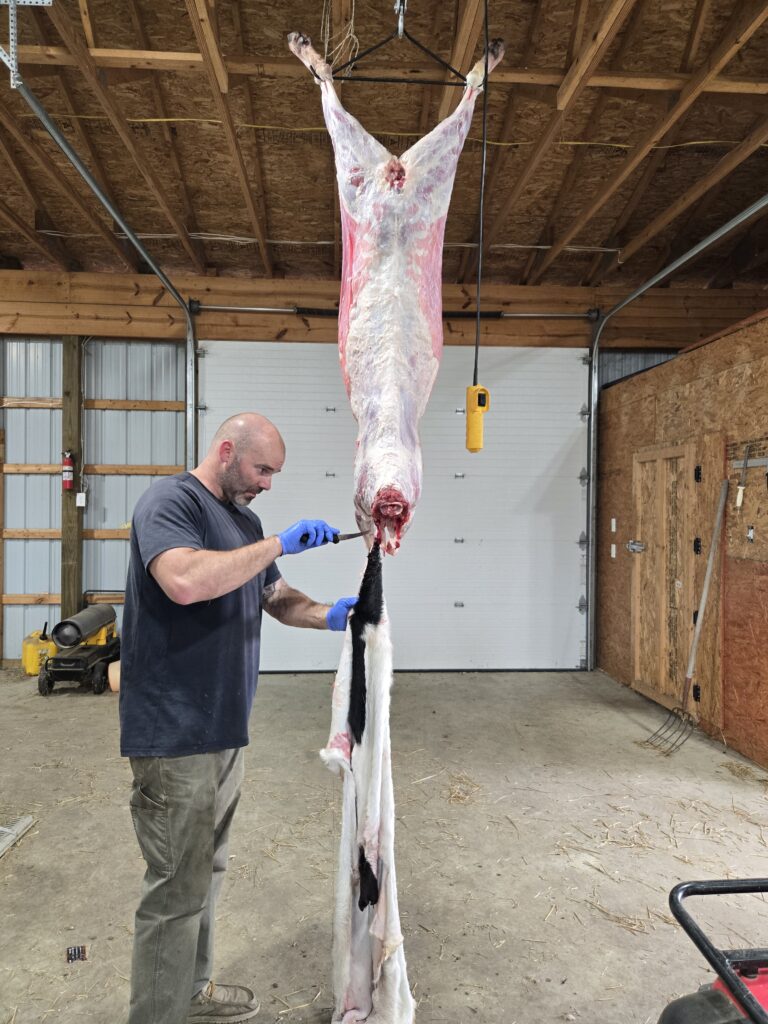
Using a Cut Sheet
Cut sheets are commonly used by professional butcher shops, but I encourage anyone processing their own animals to use one. A cut sheet forces you to think through how you want to use the entire carcass before you pick up a knife.
That planning matters because every decision involves tradeoffs. For example, if you choose bone-in rib chops, you cannot also have a boneless rib roast. If you want more ground meat, you may need to sacrifice a shoulder roast or rolled breast. Thinking ahead leads to a better final product and a freezer stocked with cuts you will actually enjoy using.
Goat Cut Sheet
We raise meat goats, and they are delicious. Because goat is not commonly consumed in the United States, much of what we learned about processing goats came through trial, error, and research. For more on goat meat and how it compares to beef, click here to read our other article.
Over time, we developed a goat cut sheet that helps us plan meals before making the first cut. Since goats are relatively small animals—typically 80 to 100 pounds hanging weight—careful planning is especially important to maximize yield and honor the animal by wasting as little as possible.
Primal and Subprimal Cuts
The bold headings on the cut sheet you’ll find below represent the primal sections of the goat. For butchers, these are the road map for breaking down a carcass. The primals divide the carcass by anatomical features into smaller, more manageable hunks of meat and bone.
They are then broken down further into subprimals and the cuts of your choosing. For instance, the loin primal can become bone-in chops, medallions, or a roast. You control not only the type of cut, but also details such as thickness and portion size, allowing you to customize the meat to your family’s preferences.
Processing Options
You will notice the cut sheet is also divided into two sides. While you could process both the same way, splitting them allows for more variety. For example, one loin can be left as a roast for a special occasion, while the other can be cut into chops for multiple meals throughout the year.
Processing the right and left side of the animal differently is a simple way to add flexibility to your freezer inventory. Keep in mind that you have a matching primal from each side. You can break them down as you please adding to the versatility of each carcass.
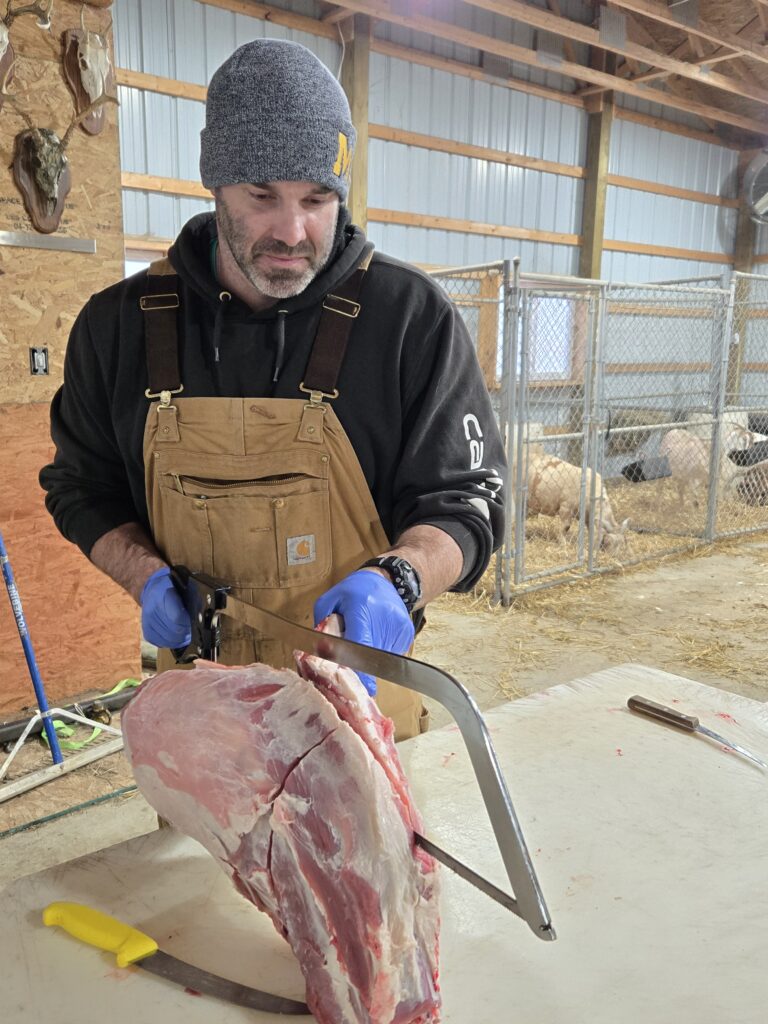
Example Goat Cut Sheet
If you’re curious, I’ve included my preferred goat cut sheet below. Feel free to download and use this. At a very high level, we prefer a good amount of burger, a few roasts, and some chops and steaks.
For our grind meat, we mix about 80-85% lean goat meat with about 15-20% goat (or pig) fat. This ensures our burgers are not crumbly and that it fries up nice in the pan. We put it in one-pound packages which makes mealtime easy.
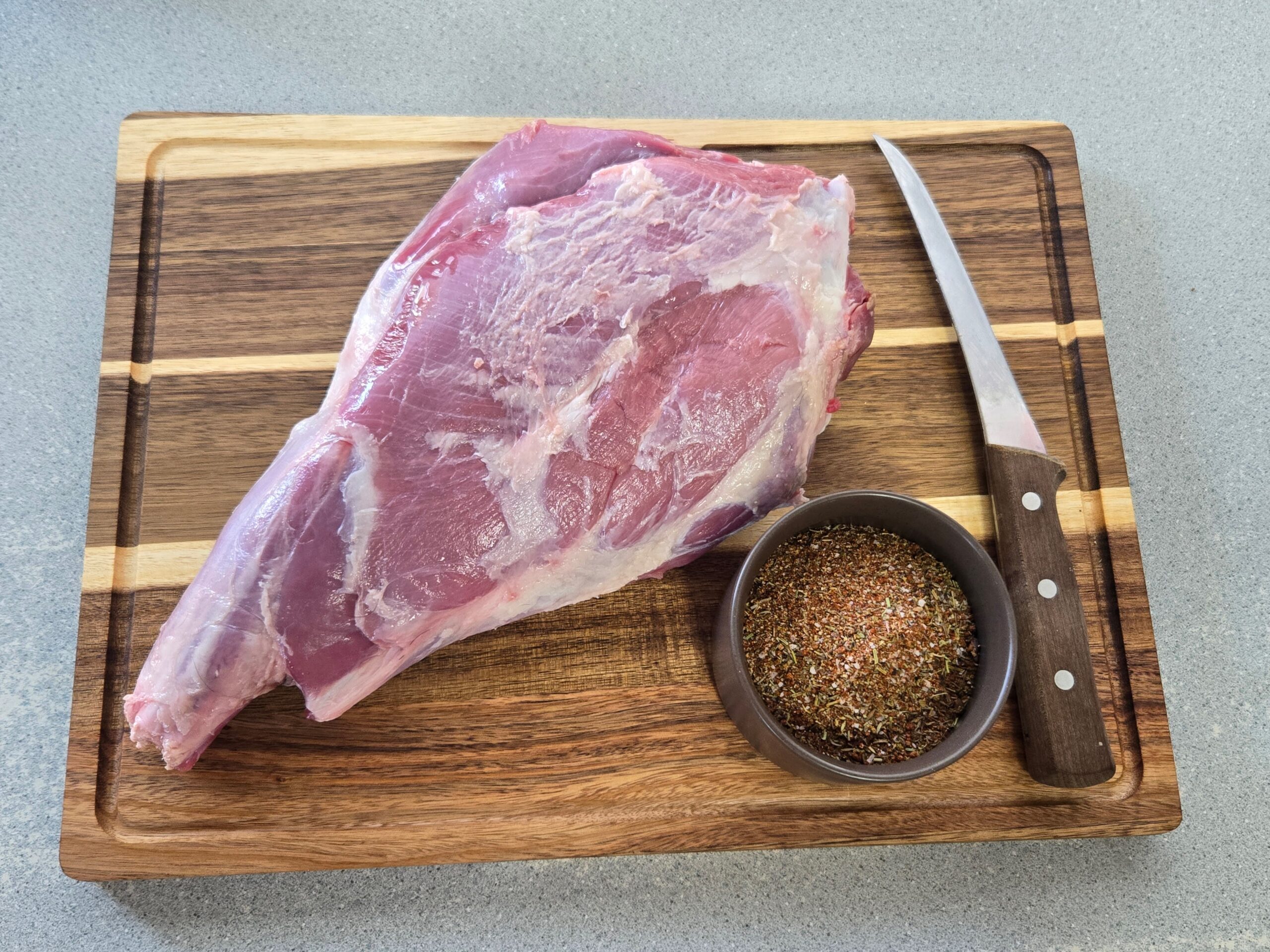
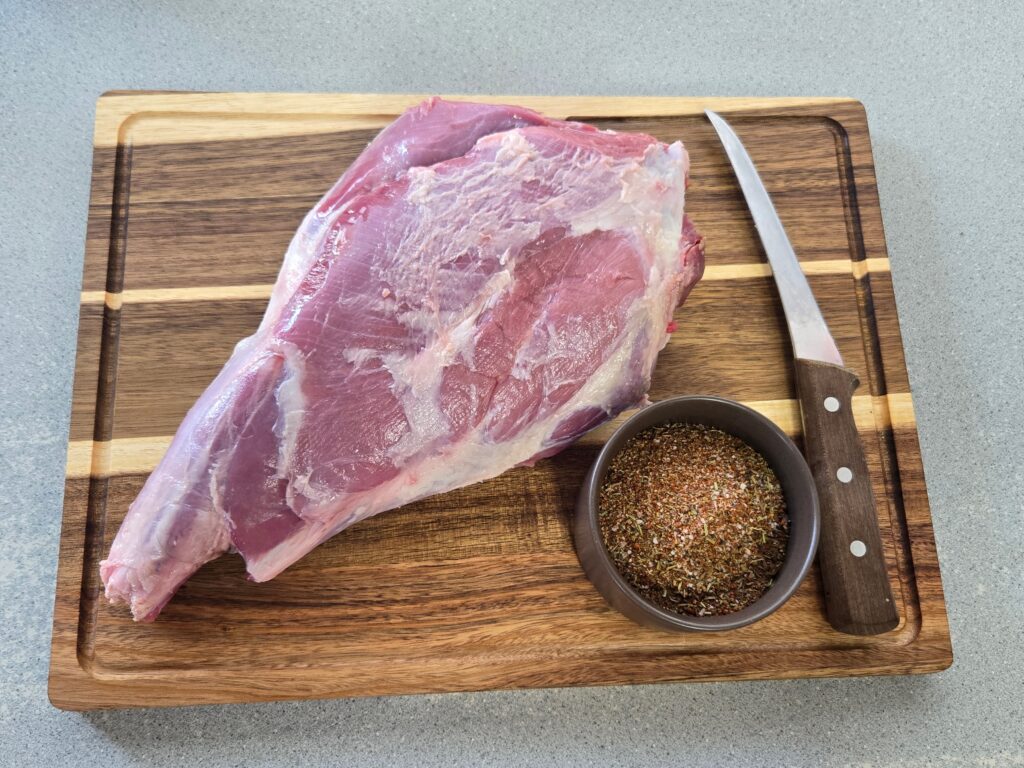
You will notice we always keep a whole bone-in hind leg. We love using our smoker and these roasts turn out beautifully when cooked low and slow. For our juniper berry rub and step-by-step directions for smoking a whole goat leg, follow the links to those other recipe posts.
The steaks and chops are also a family favorite and benefit from a quick sear in a ultra-hot skillet, followed by a short roast in the oven with rosemary butter. I almost always prefer bone-in, but they are spectacular either way.
Perhaps our favorite dish, rouladen is made in a Dutch oven with the rolled breast, mustard, spices, and vegetables. Check out how to prepare it here.
I love ribs and goat ribs are something we are continuing to experiment with. Requirements include lots of herbs and garlic, and of course a savory barbecue sauce.
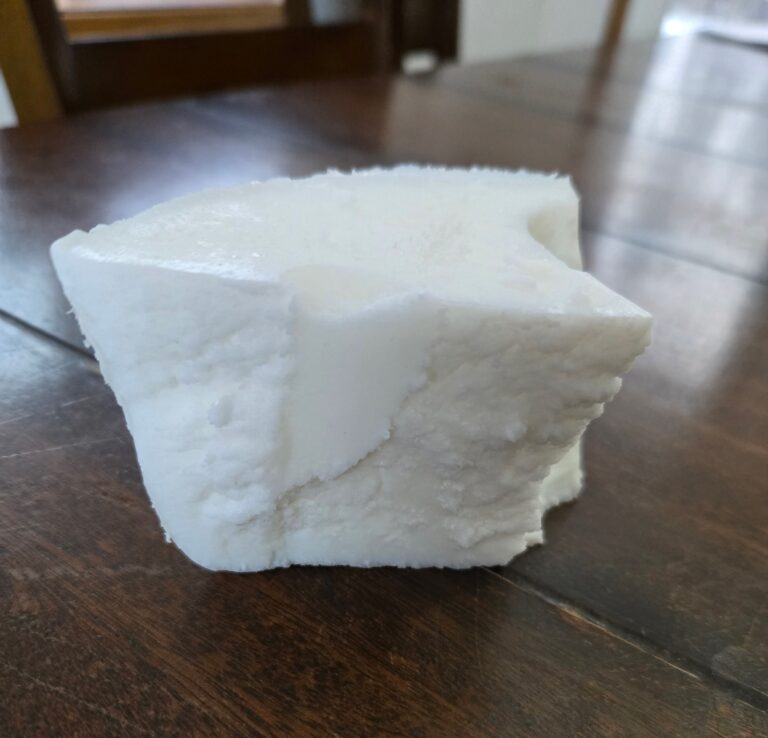
Extras include variety meats, organs, fat, and bones. We save the suet which we render down into tallow for making homemade skincare like whipped tallow moisturizer and lip balm. Follow the links for those tutorials.
In future posts, I’ll share how we like to prepare cuts and some of our favorite goat recipes.