How to Forage Wild Chestnuts

Wild chestnuts are a delicious treat to collect in the fall. Learn how to forage wild chestnuts from the forest floor in this post. Tips for tree and nut identification, dehulling, and storing wild chestnuts are provided.
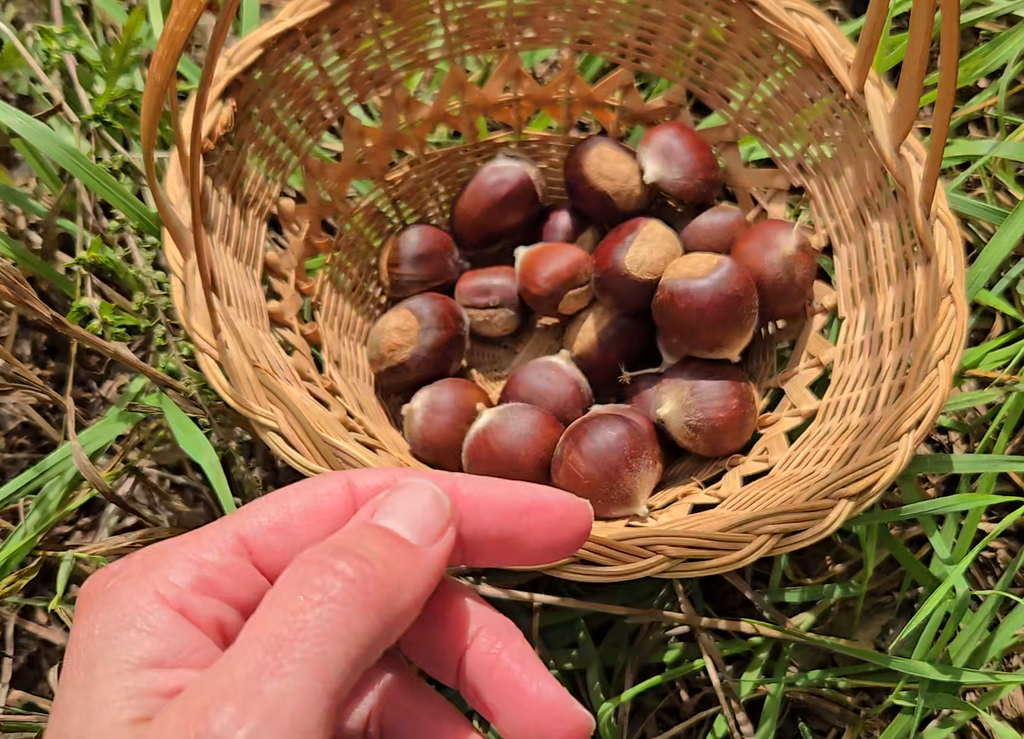
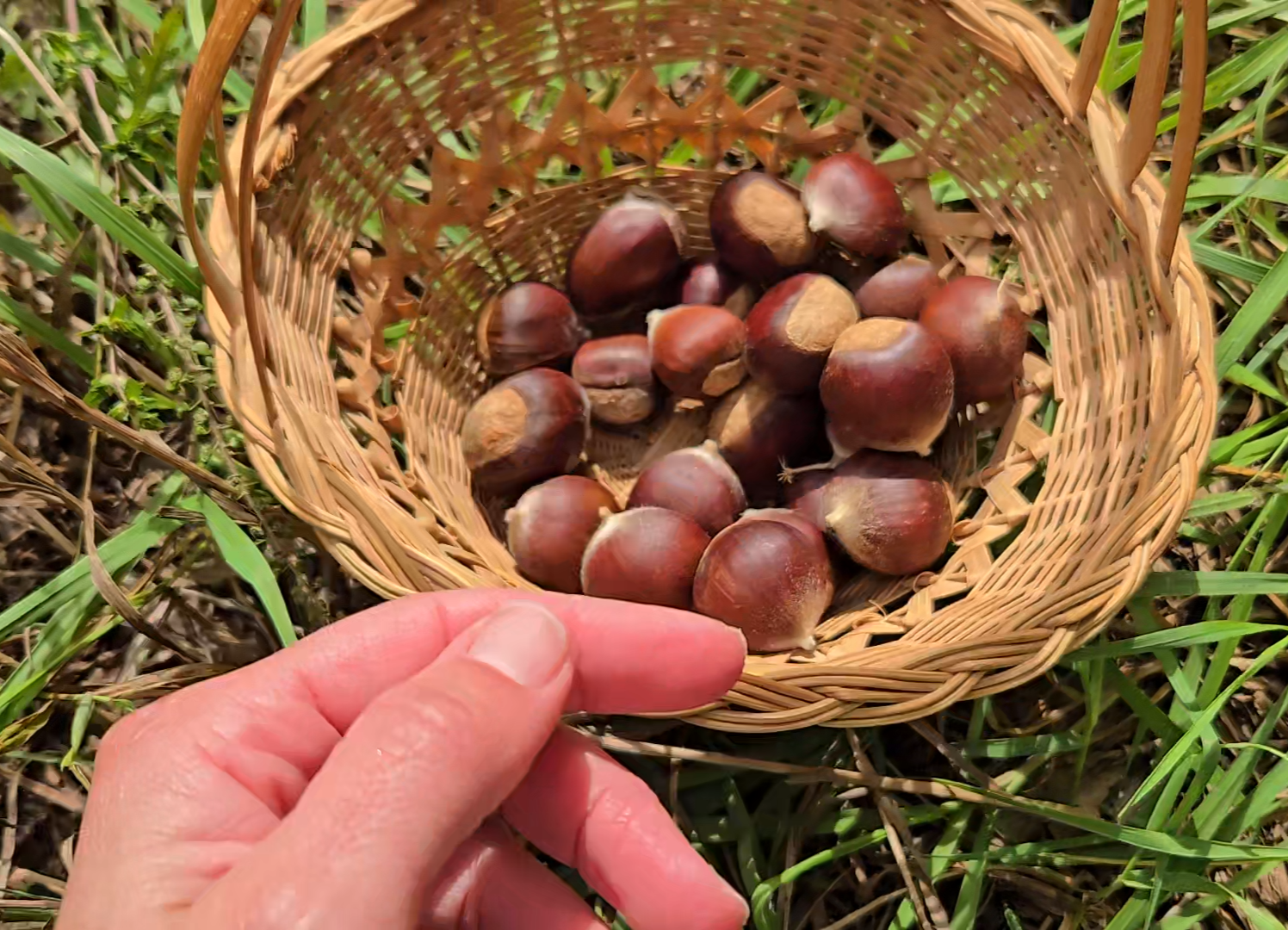
Fall is a great time for foraging in west Michigan. Among my favorite things to gather are wild chestnuts and lucky for me, I have a Chinese Chestnut tree right by my house!
Every morning and evening from late September until the end of October, I visit the tree and collect chestnuts that have fallen. It’s a race between me and the squirrels, as these nuts are a favorite meal of us both.
Identifying Chestnut Trees
When foraging, it is always best to be safe than sorry. Chestnuts do have several toxic lookalikes such as the buckeye and horse chestnut, so I recommend using a plant identification book, smart phone app, reputable website, or experienced forager to help you identify both the trees and nuts that you encounter.
There are several types of chestnut trees that produce edible nuts. In my neck of the woods, most of the American Chestnut trees were wiped out by blight. Fortunately, their cousin, the Chinese Chestnut, has persisted because it is more hardy and naturally resistant to the damaging fungus.
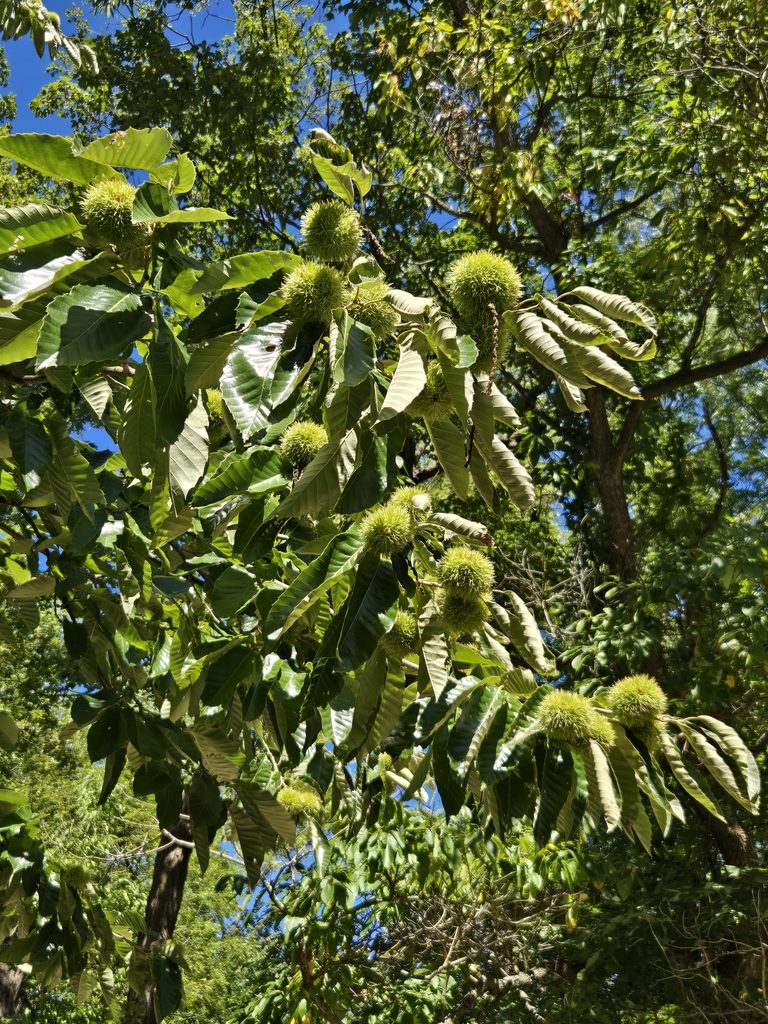
Chinese Chestnut trees can be recognized by their short trunk that divides close to the ground creating a low canopy of green leaves. Their oval-shaped leaves have small teeth on the margins, a waxy texture, and are shed in the fall.
The nuts from a Chinese Chestnut tree grow inside hulls that are green, spiky, and very sharp to the touch (see the picture below). Inside a single hull there may be one to three individual chestnuts. The nuts have a hard, shiny brown shell with a hairy tip.
How to Forage Wild Chestnuts
When they are ripe, the hulls fall from the chestnut tree or the nuts burst from the hulls and land on the forest floor. Loose nuts can be collected quite easily by hand. Opening fallen hulls to discover nuts, on the other hand, can be a bit tricky.
I use a hands-off approach to opening chestnut hulls. First, I use my feet to roll the hull to soften it and then pry it open using my rubber boots. Rubber soles work best for opening hulls because they don’t slip!
Once the hull is open, you can use your hands to collect the nuts. Personally, I only collect large chestnuts, which often are the sole occupant of a hull. If there are multiple small nuts inside, I leave them for the wildlife.
Video Demonstrating How to Open Hulls
Here is a video showing my Chinese Chestnut tree and how I open chestnut hulls without using my hands.
Storing and Using Wild Chestnuts
Chestnuts can be enjoyed raw. All you have to do is remove the shell and the thin brown skin to expose the cream-colored nut meat. They taste pretty bland raw, but earthy and pleasant.
If you’re not ready to eat them just yet, you can store fresh chestnuts in your refrigerator for a few months. To preserve them long-term, I recommend roasting the chestnuts.
Prepare your chestnuts for roasting by scoring the shell with a knife and soaking them in water. Then you can roast them in the oven or over an open fire. When the shell curls and nut meat is tender, the chestnuts can be peeled and enjoyed.
Roasted chestnuts are sweet, nutty, and delicious! For our simple method and recipe for making the best roasted wild chestnuts, click here!
More Foraged Foods
If you liked this post, check out our other foraging ideas and learn how to make: