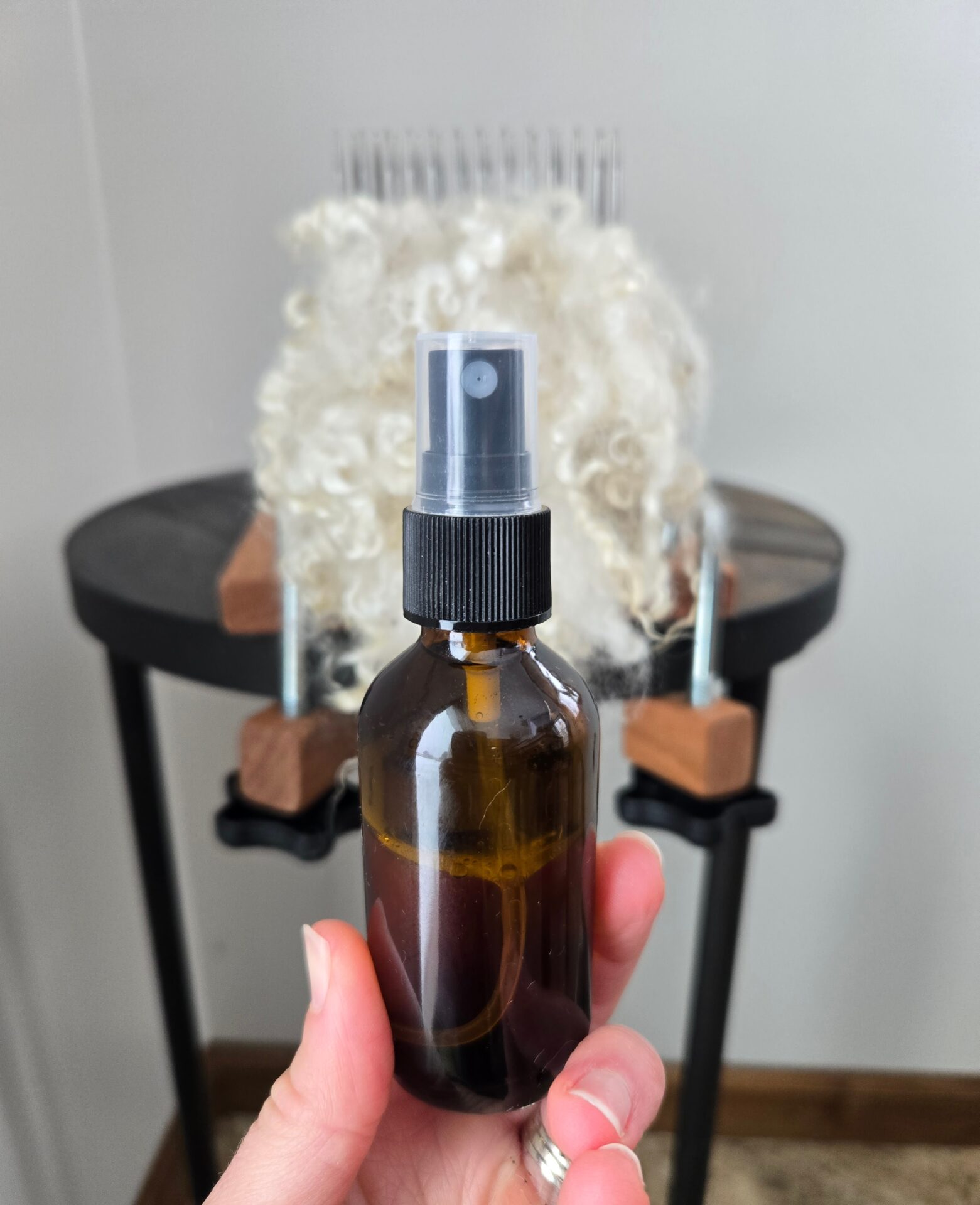
How to Make Combing Milk for Processing Fiber by Hand

You can create beautiful combed top by processing your fiber with wool combs. However, the combing process can be troublesome without a lubricant like combing milk. Here is a recipe for making your own combing milk to cut the frizz and static while using wool combs or hand cards.
This post contains affiliate links. As an Amazon Associate, I earn from qualifying purchases.
Since getting Angora goats, I have dedicated myself to learning all I can about mohair processing. I still have a lot to learn, but have gained valuable knowledge from fiber festivals, sheep producers in my area, books, and online resources. What I’ve found is that there are multiple ways to accomplish a task and the only way to really know what works best for you is experimentation.
Processing Fiber with Wool Combs
I have been experimenting with using wool combs to process my scoured mohair into combed top for spinning. I chose wool combs, instead of hand cards, because of the long staple length of my fiber and the presence of vegetable matter.
Combing aligns the fibers for worsted spinning and removes debris in the process. It is time-intensive but rewarding. For more on how I use wool combs to process mohair click here to read my other article. Processing my own mohair has helped me to better understand and appreciate both the fiber and the animals.
Benefits of Combing Milk When Processing Fiber by Hand
When I started processing my mohair with wool combs I did not use a lubricant. What I found was that the static produced made the mohair frizzy and hard to work with.
I began searching the internet for a solution and came across some articles and videos that mentioned using “combing milk.” After seeing what others had used and taking inventory of the supplies I had on hand, I developed and trialed a recipe of my own for what I am calling “mohair milk.”
The “mohair milk” lubricates the fibers just enough to cut the frizz and static so combing is quicker and easier. The ingredients are gentle and don’t build up or negatively impact your final product. It’s been a game-changer for me, give it a try or tweak the recipe to your liking!
Materials Needed for Making Combing Milk
I make my combing milk in 2-ounce amber glass bottles because I use essential oils in my recipe. They are just the right size. A small funnel helps you fill your bottle without making a mess. I use a kitchen scale to weigh my ingredients in grams and a pipette for measuring drops of essential oil.
Ingredients for Making Combing Milk
- 18 grams distilled water
- 18 grams isopropyl alcohol
- 18 grams olive oil
- 5 drops essential oil
My combing milk recipe is one third distilled water, one third isopropyl alcohol, and one third olive oil. This combination provides lubrication that dries quickly and doesn’t build up on the fibers. I added lavender essential oil to act as a natural preservative in the spray and provide some scent.
Directions for Making Combing Milk
- Remove the top from your spray bottle and place the small funnel on the opening
- Place on your kitchen scale and tare it out
- Pour 18 grams of distilled water into the bottle
- Tare the scale and pour 18 grams of isopropyl alcohol into the bottle
- Tare the scale and pour 18 grams of olive oil into the bottle
- With a pipette, add 5 drops of essential oil to the bottle
- Screw on the spray top, shake, and use your combing milk
Tips for Using Combing Milk
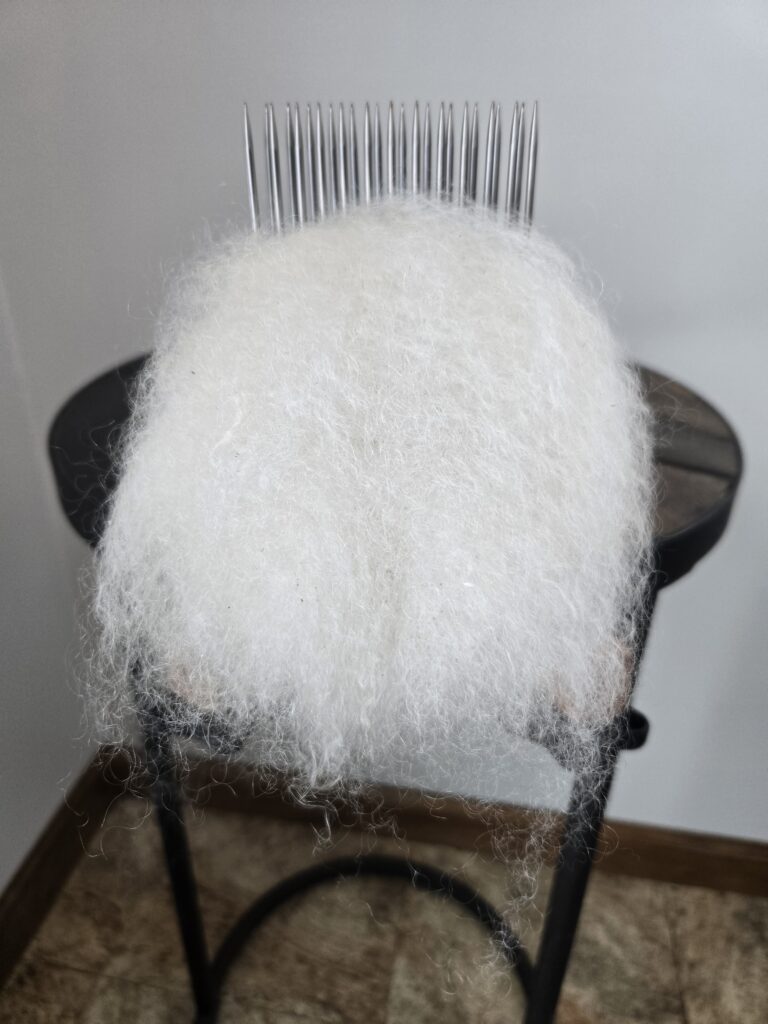
Once you have your mohair lashed onto your wool comb, spritz the locks with a fine mist of mohair milk. Begin combing and reapply as needed. You don’t need a lot of the product to cut the frizz and static. If you get your fiber too wet in the combing process, allow time for it to air dry before storing.
The combing milk separates quickly, being made of oil and water, so shake it each time before using to disperse the ingredients.