How to Add Loofah to Soap

Loofah makes a great addition to bar soap. Get improved exfoliation and lather when you add loofah to soap. Tips for preparing loofah and adding it to your homemade soap batter are included in this post.
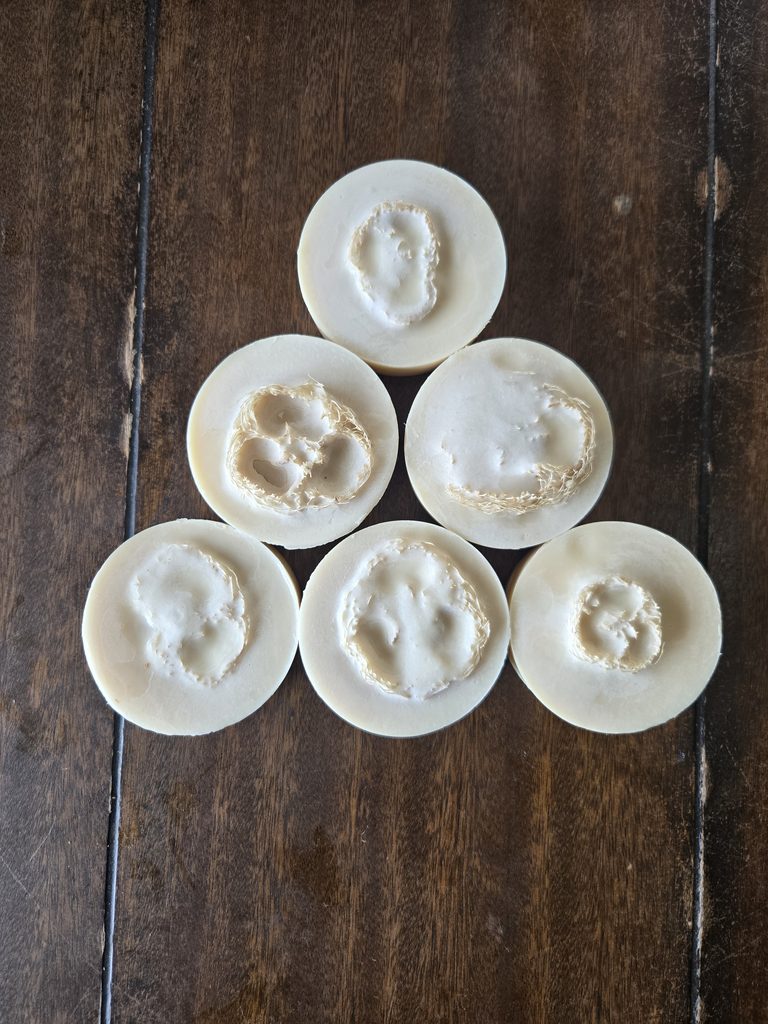
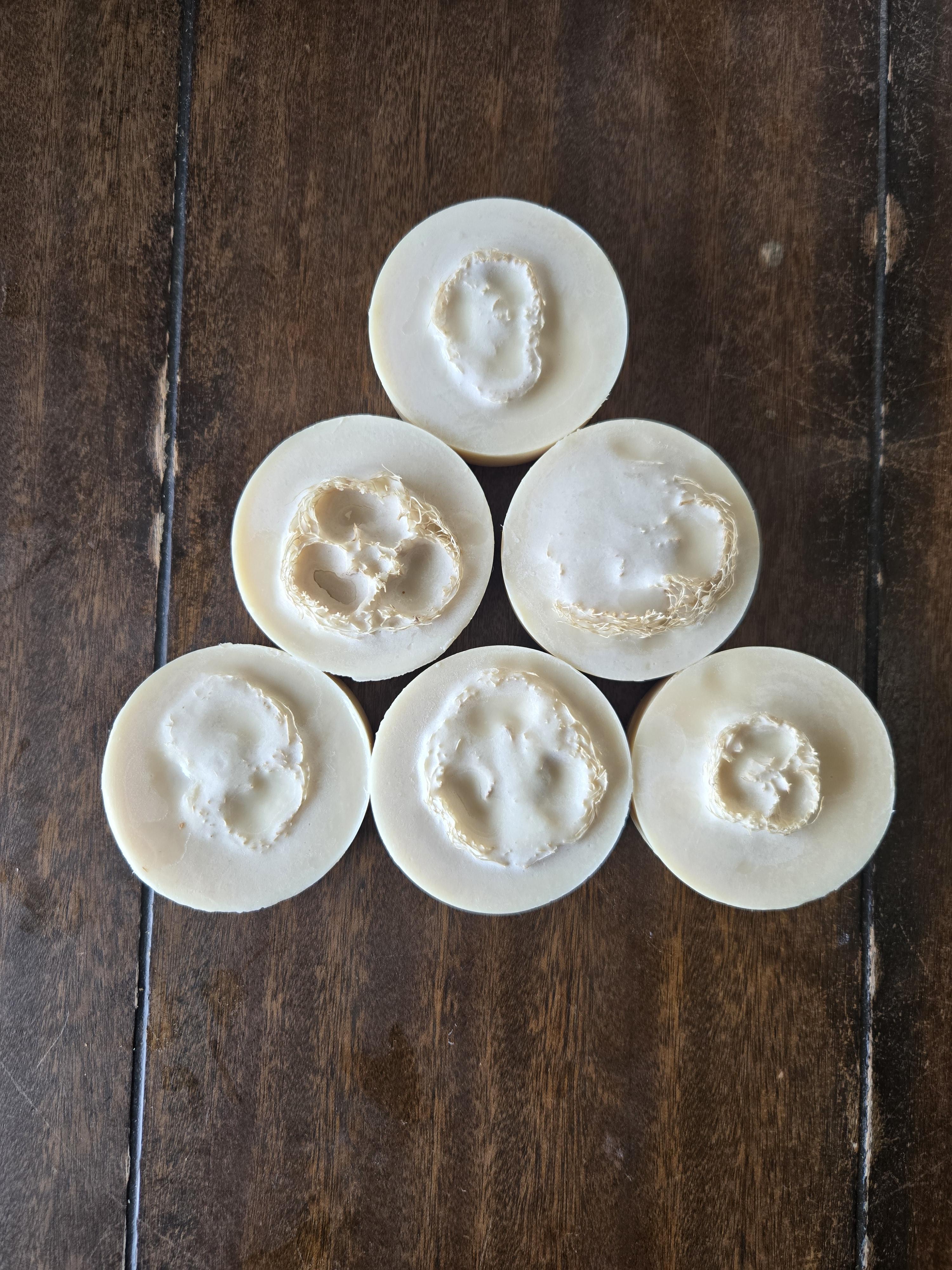
Loofah can make your homemade bar soap even more special. I like to add loofah soap to my winter inventory because it makes the perfect gift!
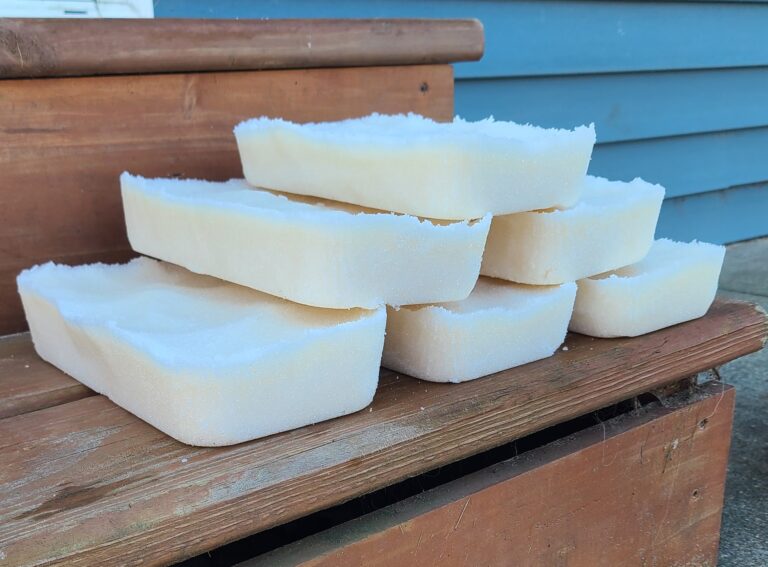
I make cold process soap with milk from my Nubian dairy goats. It is creamy, moisturizing, and has amazing lather. For my four-ingredient goat milk soap recipe, click here. To learn about the many benefits of using goat milk soap, click here!
What is Loofah?
Loofah is a natural sponge that comes from the inside of a dried gourd. These gourds resemble cucumbers when they are growing, they are long and round. Harvested loofah looks like a tan, cylindrical meshwork of fibrous plant material that often contains seeds.
Dry loofah is rough and quite abrasive, but when wet, it becomes a gently exfoliating sponge that can be used for cleaning many things, including your hands and body.
Why Add Loofah to Soap?
Loofah makes a great addition to bar soap. Adding loofah to your soap will provide a gentle way to stimulate the skin and help remove dead cells while showering. Plus, it improves lather. After bathing with a loofah soap bar, your skin will feel smooth and rejuvenated.
Not only that, but loofah also eliminates the need for synthetic bath scrubbers and provides a natural, plant-derived, biodegradable alternative.
Ways to Add Loofah to Soap
There are several ways to add loofah to soap, but the option that I prefer is to hydrate and cut the loofah to size, let it dry, and then embed it in individual soap molds during pouring. I will outline the entire process that I use below.
Alternatively, you can embed a whole loofah in a loaf of soap and cut it after it has saponified but cutting it this way can be a challenge.
Preparing the Loofah
A few days before I plan to make loofah soap, I hydrate and cut my loofahs to size in preparation. You can hydrate loofahs by putting them in a jar of water for a few minutes.
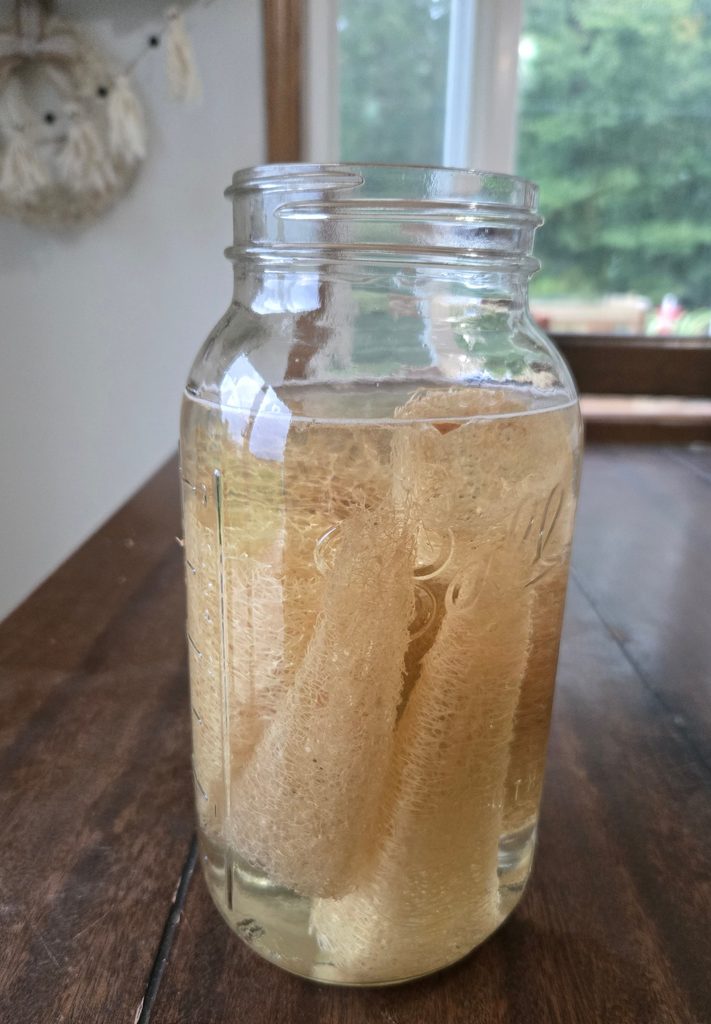
Once they are moist and soft they are easy to cut. I use kitchen scissors to cut my loofah into 1-inch pieces. I make them this size because the soap molds that I use are 3 inches across and 1 inch deep.
After you cut your loofah, it is time to find and remove any seeds that may be present. You don’t want to leave seeds behind because they will stay slimy in your soap and can impede its ability to cure properly.
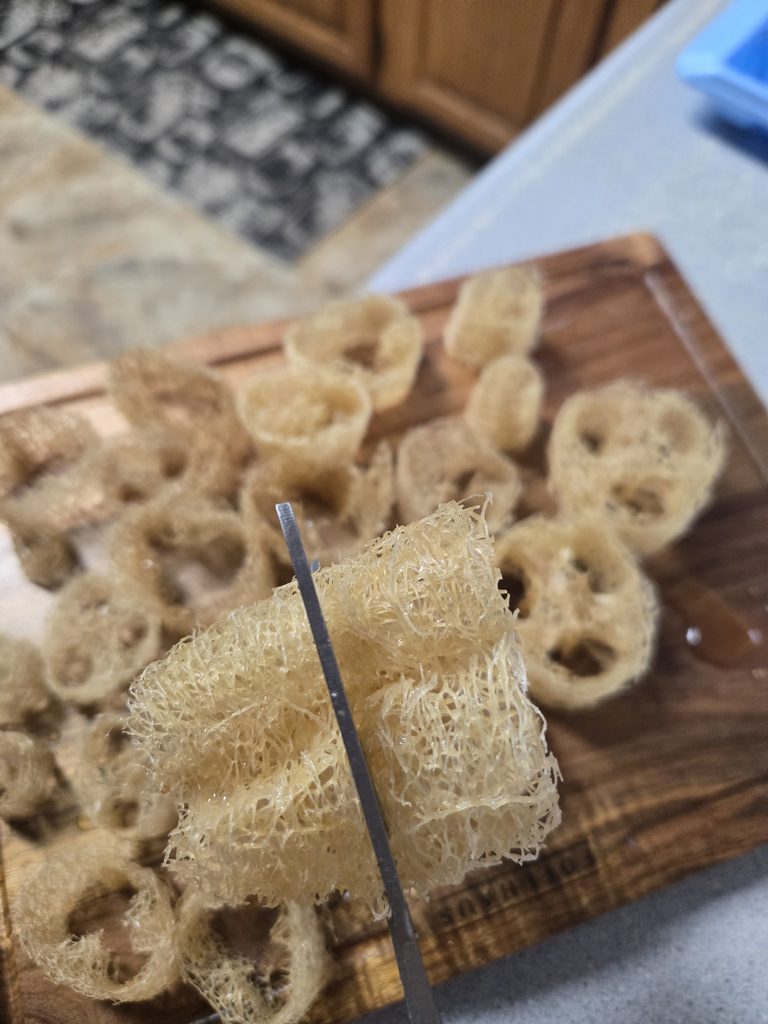
Now, just let your cut loofahs dry out again and you are ready to add them to soap!
How to Add Loofah to Soap
Before you start mixing up your soap batter, have everything ready to go. I load a piece of dry loofah into each soap mold that I plan to use.
When making your soap, I recommend mixing just until you reach light trace. If the batter is too thick, it may have a hard time completely covering and enveloping the loofah. Also, if you are using multiple small molds, this will ensure you have enough working time to fill them all before it hardens.
Once your soap it at light trace, use a ladle or soap pouring pitcher with a spout to fill each mold. Pour the soap right onto the loofah and let it become fully engulfed. If the loofah moves out of place or floats, you can use a gloved finger to reposition it.
Allow the soap to complete the saponification process and then unmold it. I put my soap molds in the freezer for the first 24 hours, then sit at room temperature for 24 hours before unmolding.
Cure the soap on a drying rack with adequate air flow for 4-6 weeks before using it and enjoy your wonderful creation!
Video Tutorial Adding Loofah to Soap
Watch how I prepare and fill my molds adding loofah to cold process goat milk soap in this short video.
Using Loofah Soap
To use loofah soap, get it wet, rub to form a lather, and then wash your hands or body, focusing on rough areas. Avoid using it on sensitive skin, like your face.
Make sure the loofah bar dries between uses. You can store it on a soap dish that drains water or hang it up by adding a piece of cotton string. For more details on making soap on a rope, click here!
Once the soap has been used up, the loofah will be all that is left behind. I don’t save the loofah that was in my soap, but I do use it to scour my shower with a cleaning product before discarding.