8 Reasons to Start Rotationally Grazing Goats

Rotational grazing can provide many benefits for your animals and land. Here are some of the reasons we made the switch from continuous to rotational grazing. Equipment recommendations and considerations for rotationally grazing goats on your farm are provided.
This post contains affiliate links. As an Amazon Associate, I earn from qualifying purchases.
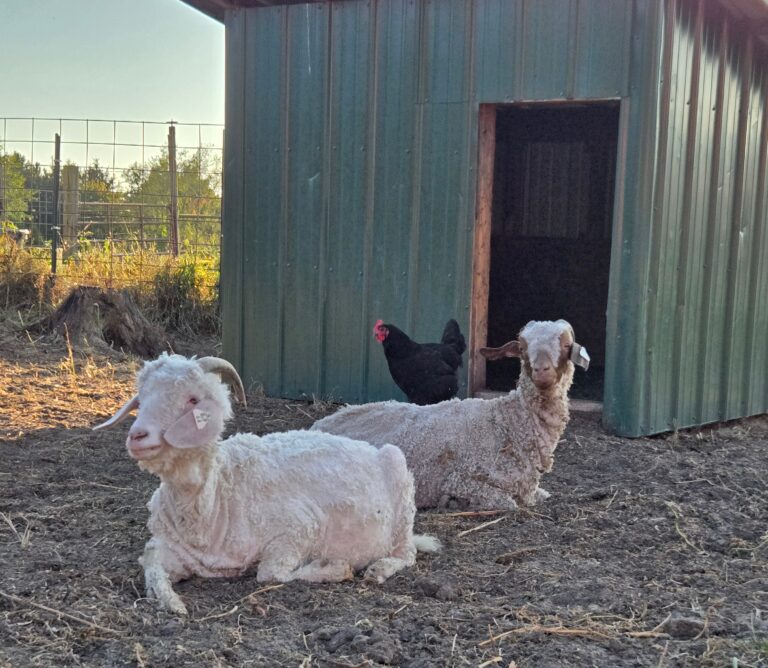
Rotational grazing has been a gamechanger for our farm. We raise dairy, meat, and fiber goats and used to have to feed hay year-round because our pastures just could not keep up.
Since implementing rotational grazing, not only do we save money on feed costs, but also have more productive animals and pastures.
Here’s why we made the switch!
Rotational Grazing vs. Continuous Grazing
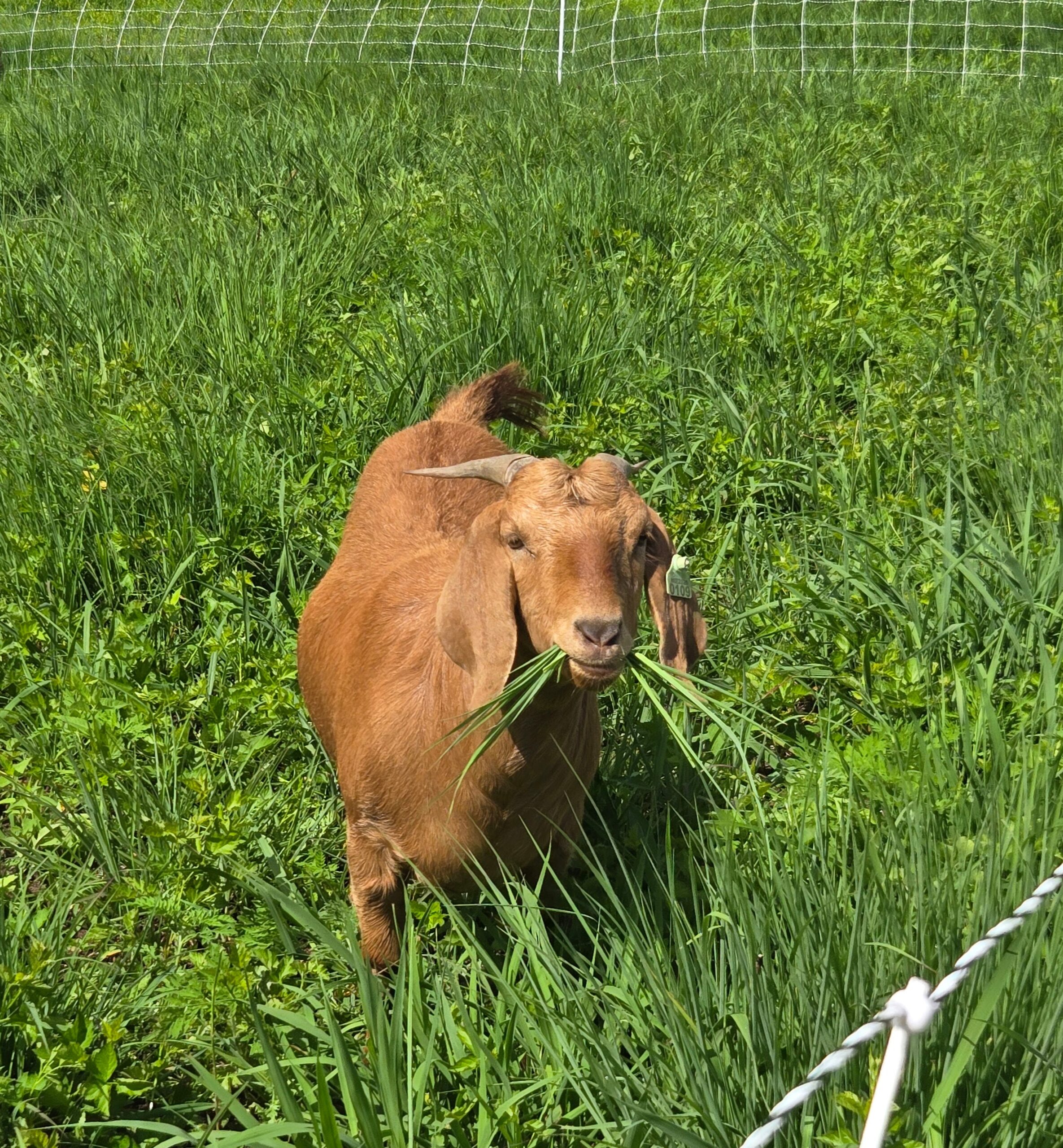
Rotational grazing and continuous grazing differ in that a pasture is subdivided into paddocks for rotational grazing, while the whole space is left open in a continuous grazing scenario. Rotational grazing paddocks are often made with temporary fencing like poly-tape or electric netting.
With rotational grazing, the animals can only graze in a specific area and everything else is blocked off. As the name implies, rotational grazing involves moving the herd (of goats in our case) from one paddock to another in a planned sequence.
1. Rotationally Grazing Goats Improves Pasture Utilization
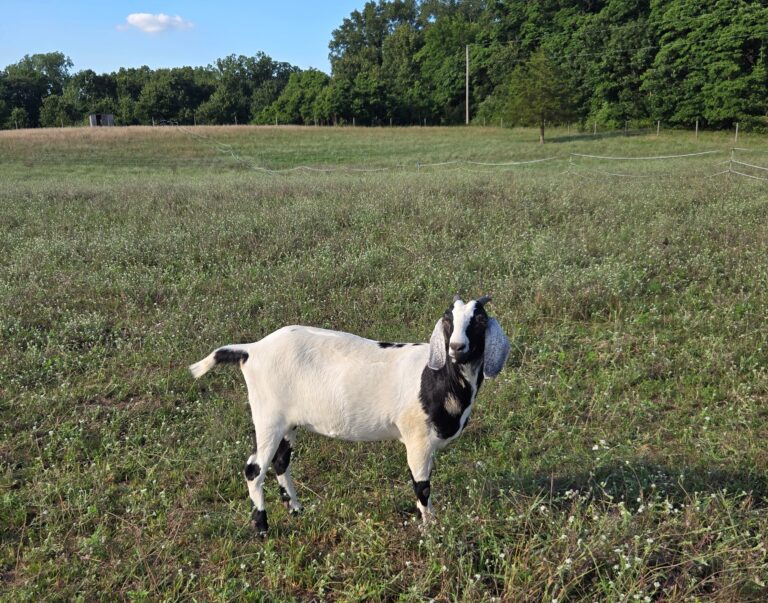
One of the benefits of rotational grazing is improved pasture utilization. If your goats are like ours, they spend a lot of time hanging out in their favorite places like by the barn, water tank, or mineral station if they can. Only in the late morning and just before sunset do they venture out to the fringes of the pasture to fill their bellies when in a continuous grazing situation.
Forcing your goats to stay in lower-traffic areas of the pasture with rotational grazing can help prevent them from becoming taken over by weeds and shrubs. It will also allow your high-traffic areas, or hot spots, to recuperate from animal impact.
2. Rotationally Grazing Goats Improves Pasture Productivity
Similarly, rotational grazing can help improve the overall productivity of your pastures. Goats, like other types of livestock, prefer certain types of forage and will cherry-pick their favorite snacks if they can. When they have plenty of options, they will ignore the less palatable plants and then they become overgrown.
In a small rotational grazing paddock, the goats will quickly run out of their preferred meal options and will have to make do with what is still available. Our goats do a great job of cleaning up what our horses leave behind and wont eat, so we have them follow in the rotations on our farm. For more on grazing goats with horses, click here to read my other article!
3. Rotationally Grazing Goats Protects Pastures from Overgrazing
While the goats are in one paddock, the rest of the pasture gets to recover and regrow. We wait at least 30 days before allowing animals to come back onto a pasture that has already been grazed. We also aim to move the herd before the forage gets too short so that the plants don’t become damaged and can bounce back.
Preventing a pasture from becoming overgrazed is important. Rotational grazing helps protect root systems and ensures that there is covered soil that wont become eroded by wind or rain.
4. Rotationally Grazing Goats Improves Soil Health
Rotational grazing makes certain all areas of our pasture get fertilized by the goats as they feed and drop manure. Plus, the grinding of their small hooves helps aerate the soil.
Even better, the rest periods when paddocks are not in use allow the organic material and nutrients to be fully absorbed and utilized by the plants for growth.
5. Rotationally Grazing Goats Extends the Grazing Season
Rotational grazing helps extend our grazing season in west Michigan into the fall months. When we practiced continuous grazing, we would run out of grass for the animals to eat rather quickly, so we had to limit the number of goats in our herd.
Now that the pastures are subdivided and have a chance to grow back, we can raise more animals on the same amount of land.
6. Rotationally Grazing Goats Saves Money on Feed
Rotationally grazing our goats for half of the year keeps us from having to feed as much hay and grain. Grass is essentially free, and by stewarding that valuable resource we turn something that doesn’t cost anything into saleable goat milk, meat, and mohair.
The cost savings associated with rotational grazing helps make our farm sustainable. For more on ways that you can save or make money with goats, click here to read my other article.
7. Rotationally Grazing Goats Improves Animal Performance
Goats that are rotationally grazed have access to higher quality forage, which is more nutritious. Fresh, nutrient-dense feed helps our goats maintain adequate body condition and leads to better daily rate of gain in our meat goats, superior milk production in our dairy goats, and longer fleeces in our fiber goats.
Our herd is primarily made up of meat goats and we take pride in raising delicious grass-fed meat for our family and customers, which wouldn’t be possible without rotational grazing. For more on how goat meat compares to beef, click here to read my other article.
8. Rotationally Grazing Goats Improves Animal Health
Last, but definitely not least, rotational grazing makes our goats healthier. Being able to consume fresh food in a clean pasture has greatly reduced our need for using chemical dewormers.
Goats are especially susceptible to worms and moving them before the larvae mature and become re-ingested interrupts the parasite lifecycle. Within a few weeks without a host, the larvae left behind die and the pasture is no longer infective.
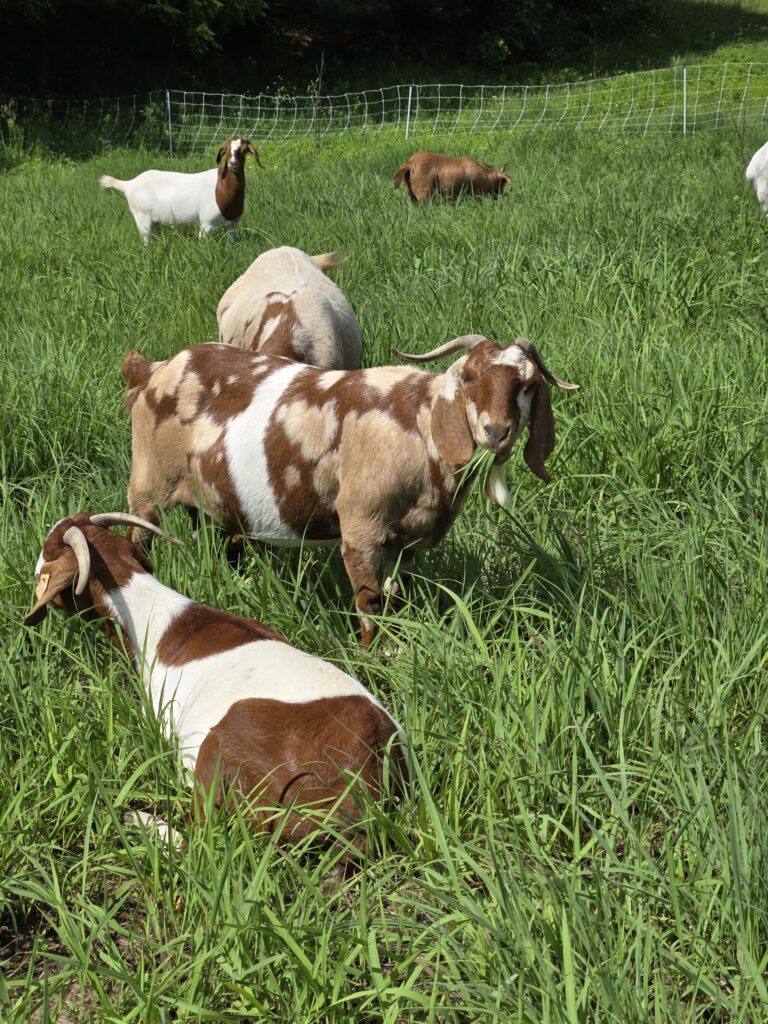
We try to move our goats every three days and maintain a sward, or plant height, of at least 4 inches because most of the parasitic larvae are found close to the ground.
Drawbacks to Rotational Grazing
The only drawbacks to rotational grazing are the money and time required to implement this practice. Let’s talk about mitigating those so you can start reaping the benefits of rotationally grazing your goats!
Fencing, energizers, and watering systems for rotational grazing are all costly to purchase upfront. The good news is that if you buy high quality equipment and maintain it, it will last for years. For details on the products that we use and recommend for rotationally grazing goats, click here.
It takes time to train your animals to respect the portable fencing and to learn to move as a group from one paddock to the next. However, once they know the drill, this is no longer something to struggle with. For tips on training your goats for rotational grazing, click here to read our other article.
Rotational grazing is somewhat labor intensive, but the rewards are worth the work. It takes both time and energy to set up paddocks. A trusty ATV or side-by-side for carrying gear and an extra set of hands can expedite the process.
Finally, you will have to be organized, disciplined, and commit ample time to moving your goats every few days. Sticking to a schedule is a must for success with rotational grazing, but you can do it!