How to Make Cold Process Goat Milk Soap with 4 Ingredients

Goat milk soap is creamy, cleansing, and extremely gentle on the skin. You can make a luxurious cold process goat milk soap with just four ingredients using this recipe. An equipment list, directions, and ideas for adding color and scent are included.
This post contains affiliate links. As an Amazon Associate, I earn from qualifying purchases.
My journey in soap making started when my daughter was young. She suffered from dry, sensitive skin and I was determined to find something that would ease her discomfort.
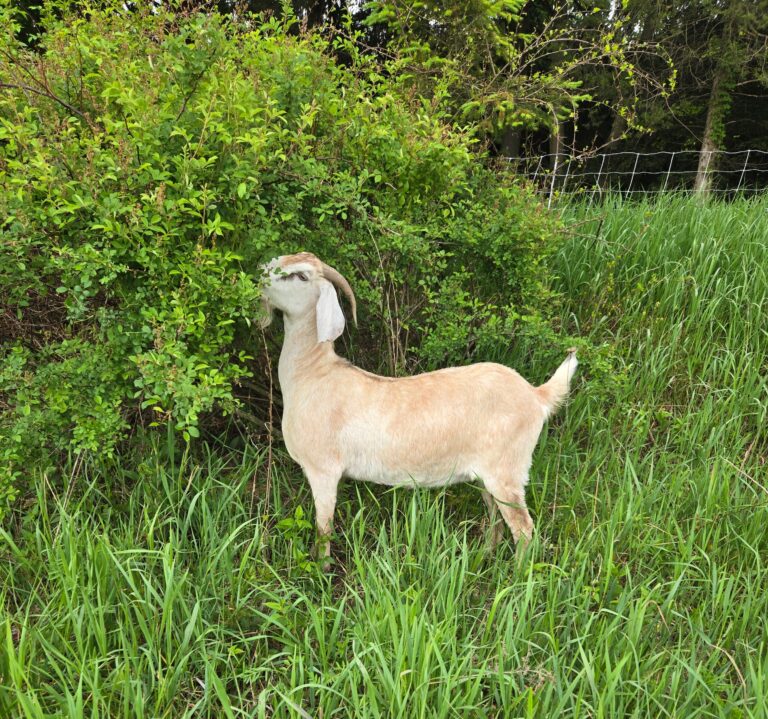
We tried a lot of different products, but as it turned out, one of the most helpful things was already right in our refrigerator, fresh, raw milk from our Nubian dairy goats.
Goat milk soap worked wonders on her skin and now it is all we use in our household. Since then, soap making has become my passion and part-time job.
I take pride in raising healthy, happy goats and creating homemade skincare products that make people feel good. Today, I am sharing my base recipe so you too can enjoy the many benefits of goat milk soap.
Why Goat Milk Soap?
Goat milk soap offers luxurious lather and gentle cleansing. It is creamy, moisturizing, and doesn’t strip the skin of its natural oils.
The fatty acids, vitamins, and minerals in goat milk soap leave skin feeling nourished and protected, instead of dried out and irritated. For more reasons to make the switch to goat milk soap, click here to read my other article!
Cold Process Goat Milk Soap
This recipe is intended for making goat milk soap using the traditional cold process method. Cold process soap making involves mixing oils with a lye solution. An exothermic chemical reaction takes place as the ingredients saponify.
The soap batter is poured into molds and then sets for 24-48 hours. After that time, it should be cut and allowed to cure on a drying rack for 4-6 weeks before use.
Cold process soap is technique sensitive. It requires careful measurement and the use of personal protective equipment. For more on the soap making equipment that I recommend, click here to read my other article.
Four Ingredient Goat Milk Soap Recipe
2.4 pounds olive oil
1.6 pounds coconut oil
9.6 grams lye
10 ounces goat milk
This basic goat milk soap utilizes just two oils, olive and coconut. Olive oil gives the soap a creamy lather and adds to the bar hardness, while coconut oil acts as a cleaning and moisturizing agent. Note that the oils are weighed in pounds.
I have discounted these oils and added castor, sweet almond, avocado, and other oils and butters to achieve different soap consistencies. I recommend using SoapCalc, the online tool to formulate your recipes and make sure they are balanced.
Sodium hydroxide or lye is needed to make cold process soap. My favorite brand of lye is Red Crown. It comes in small granules that mix well. Note that the lye is measured in grams.
I use frozen, raw goat milk to make soap. Freezing the milk ahead of time helps keep the temperature low and prevents scorching of the milk’s natural sugars by the lye. Note that the milk is measured by volume in ounces, not weight in ounces.
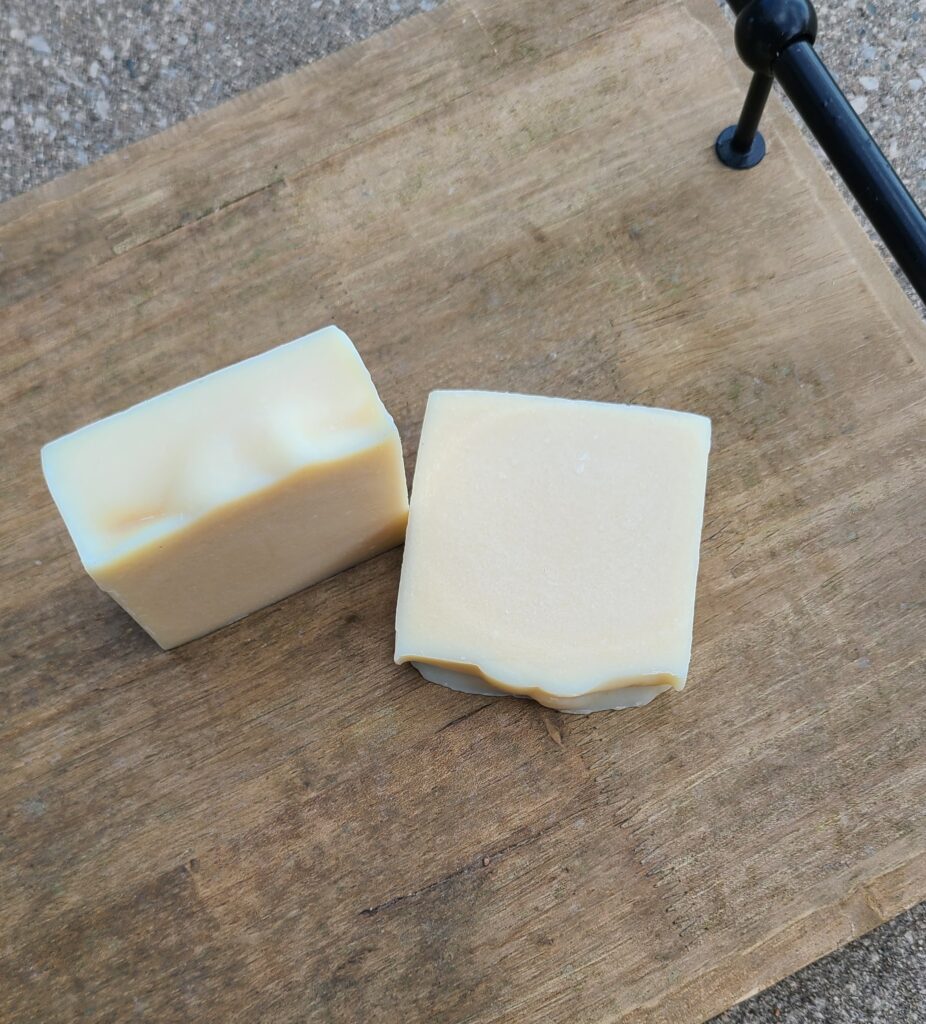
This recipe will yield more than four pounds of soap. I use two 42-ounce silicone loaf molds when making this recipe and cut each loaf into 10 bars.
Goat Milk Soap Equipment List
- Gloves
- Safety glasses
- Kitchen scale
- Cup for weighing lye
- Milk and lye mixing bowl
- Spoon
- Whisk
- Large bowl for mixing milk/lye and melted oils
- Thermometer
- Lye strainer
- Immersion blender
- Ladle
- Rubber spatula
- Two 42-ounce silicone loaf molds in pine nesting boxes
- Rubbermaid tote
- Freezer space
- Soap cutter
- Drying rack
Safety is paramount, use gloves, eye protection, and long sleeves when making cold process soap to prevent lye burns. Weigh all ingredients carefully using a kitchen scale. Only make soap using stainless steel, heavy-duty plastic, or glass equipment. Lye will react with aluminum, tin, and Teflon.
Use an infrared or candy thermometer to monitor the temperature of your oils and milk/lye solution. The lye should be strained to ensure any granules not completely dissolved to not enter the soap batter. These can result in lye pockets in the soap that will burn the skin.
An immersion blender is necessary to accelerate saponification and create a smooth soap batter for pouring. Use a ladle to fill your soap molds without making a mess.
Do not clean your soap making equipment in your sink. The soap batter will harden in your pipes and cause issues with your septic system. I rinse all my equipment into a Rubbermaid tote and dump it outside.
I put my freshly poured soap in the freezer for the first 24 hours to help keep the temperatures from getting too high. If the soap gets too hot, it will crack. After 24 hours, I let it sit out at room temperature for another 24 hours. Then, I unmold my loaves and cut them using a multi-wire soap cutter.
Cold process soap must cure for 4-6 weeks before being used. I put my freshly cut soap on stainless steel baking racks allowing space for air to circulate under and between each bar.
Directions for Making Four Ingredient Goat Milk Soap
- Freeze premeasured goat milk in ice cube trays
- Prepare workspace and assemble all equipment
- Put on gloves and safety glasses
- Weigh lye using a kitchen scale
- Warm the coconut oil so that it becomes liquid, I put the container into a slow cooler with water to melt it quickly
- Transfer cubes of frozen milk into a bowl and a small amount of lye
- Stir with a spoon until the lye is dissolved
- After the cubes of frozen milk have melted, add more lye and switch to stirring with a whisk
- Continue adding more lye to the milk in small increments until the total amount has been added. Keep the temperature low by using an ice bath around the bowl or putting it in the freezer periodically. The milk should not turn bright yellow or orange or have a strong ammonia-like smell, if it does the sugars have been scorched!
- In between adding lye, measure out your oils. Add both the olive oil and coconut oil to the large mixing bowl
- When the oils and lye/milk mixture are both around 75 degrees Fahrenheit they are ready to be combined
- Put your strainer over the bowl of oils and pour the lye/milk mixture through to catch any undissolved granules
- With the immersion blender off, begin mixing the soap batter
- Turn the immersion blender on low speed and intermittently mix the soap batter for one minute
- Mix on high speed for an additional minute
- Continue mixing until light trace is reached. You can check for trace by picking up the immersion blender and drizzling the batter. It should leave a trail that sinks back in quickly.
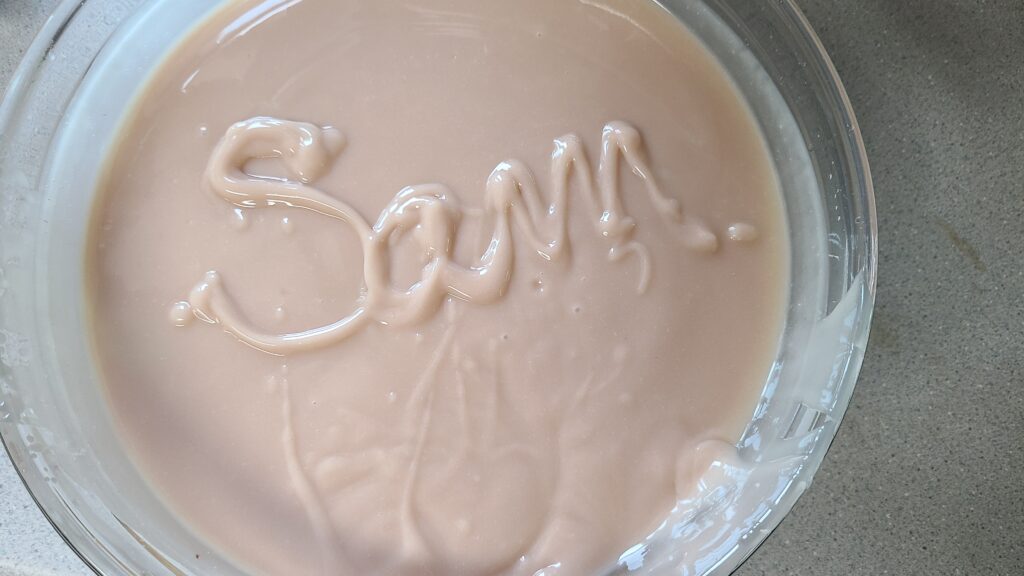
- Pour the batter into molds or use a ladle to spoon it into the molds
- Tamp the batter down to remove any air bubbles by carefully banging it on your counter a few times
- Use a spoon to make a design on the top of the soap
- Place the molds into the freezer for 24 hours
- Clean all the soap making equipment by washing in a Rubbermaid tote
- After 24 hours, remove the molds from the freezer and let them sit out at room temperature for 24 hours
- Unmold the soap and cut the loaves with a soap cutter
- Put the bars of soap on a drying rack and allow them to cure for 4-6 weeks
- Use your homemade goat milk soap!
Scenting and Coloring Goat Milk Soap
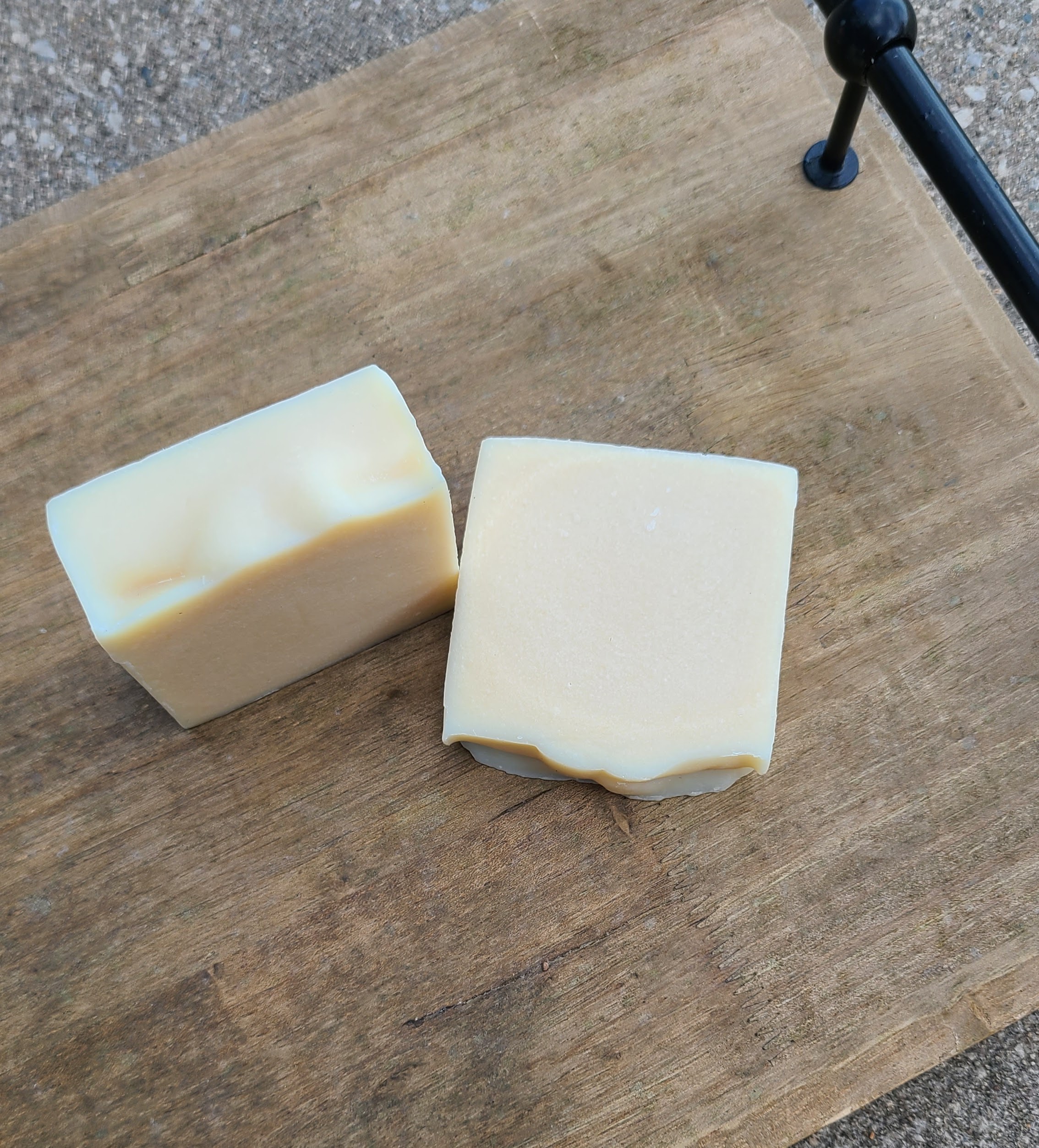
This recipe creates a basic, unscented bar of soap with a natural white color. If you want to add scent to your soap you can do so once it has reached light trace. Use two ounces of the essential oils or fragrance oils of your choice and blend until combined. I purchase all my soap-making scents from Brambleberry.com because they are tested as skin-safe and are guaranteed phthalate-free.
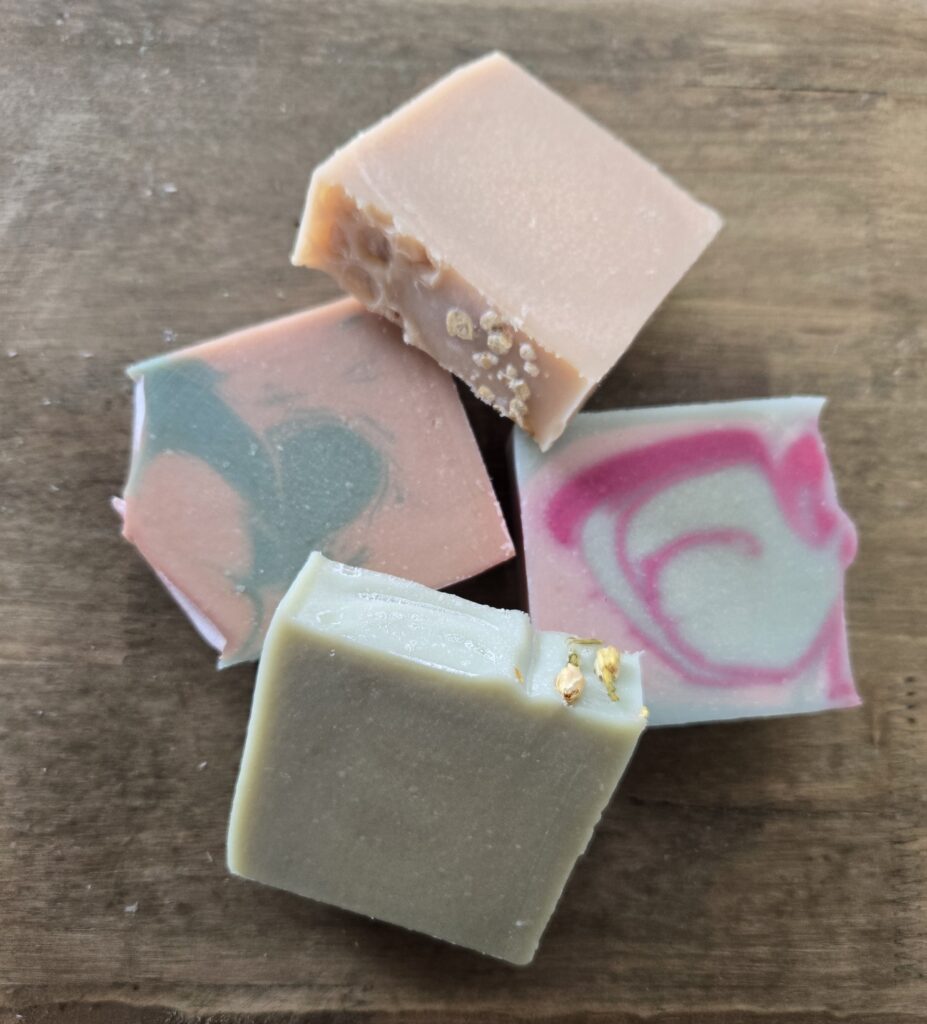
To make your soap a work of art, you can add mica powder or spices for color. Separate the batter and add the colorants at light trace and blend to combine. Drop or swirl the batter when filling your molds to make intricate designs. It is so much fun to experiment with colored pours and see what you get when cutting the soap.
If you want to label your soap, I recommend cigar bands. Learn how I make mine with Microsoft Word in this post, a free downloadable template is included. Happy soap making!
Goat Milk Soap Video Tutorial
See soap making in action! In Part 1, follow along as I add fragrance and color to my creamy, luxurious goat milk soap base and create a double batch of lavender with the drop swirl technique.
In Part 2, watch as I unmold and cut soap loaves with dried flowers on top. Learn about using baking racks for cold process soap curing.