Raising Goats for Meat: 14 Reasons Goat is the New Beef

Goat meat is a comparable alternative to beef. Compare and contrast goat meat and beef, as well as raising goats for meat to cattle in this post. Explore the possibilities of supplementing or substituting beef with goat meat during the national cattle shortage.
This post contains affiliate links. As an Amazon Associate, I earn from qualifying purchases.
You are probably aware of the current national cattle shortage or have at least noticed some of its effects. According to the United States Department of Agriculture, cattle inventory is projected to reach a multi-decade low in 2025 with 86 million head, which would be the lowest cattle inventory since 1951.
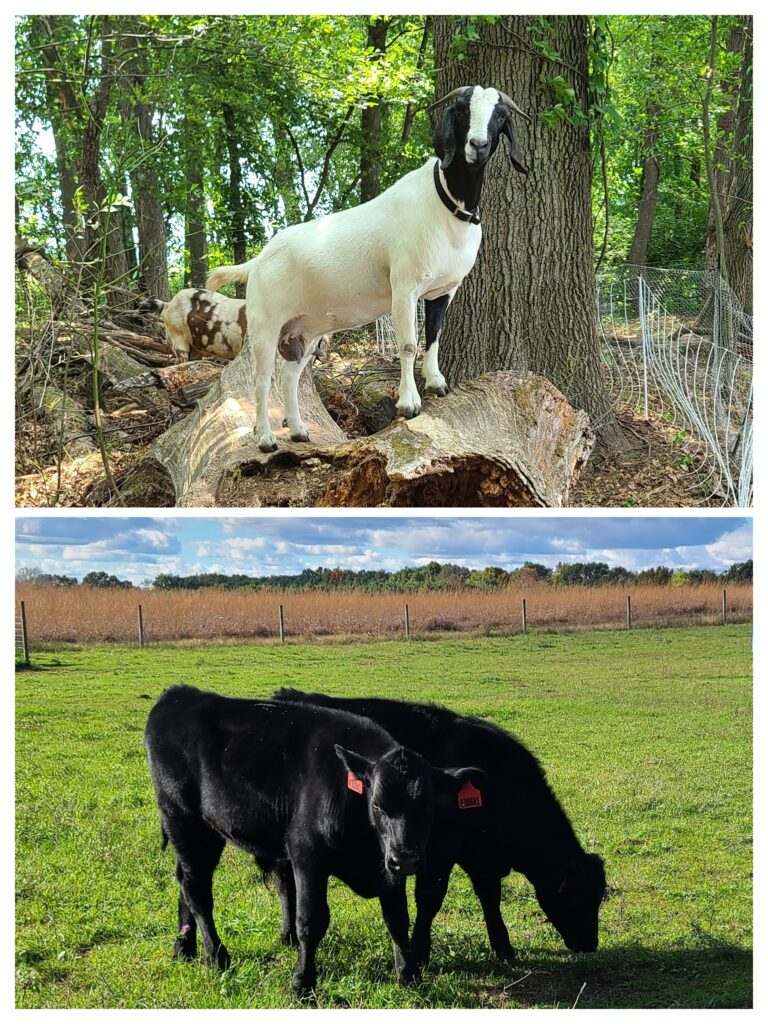
This shortage has resulted in record high prices. If you are looking to buy cattle in the near future, you better have a fat wallet. When I was looking for feeder calves for my kids for 4-H projects earlier this year, I was disheartened to find that the prices were ten times what they were just five years ago.
Even if you aren’t buying cattle, we are all seeing higher prices in beef at the grocery store or restaurant, with no chance of that changing in the foreseeable future.
With fewer cattle and still a steady demand for red meat, this puts us in quite a quandary, but there’s good news. I’m here to tell you about an unsung hero that can save the day: The meat goat.
Meat Goats
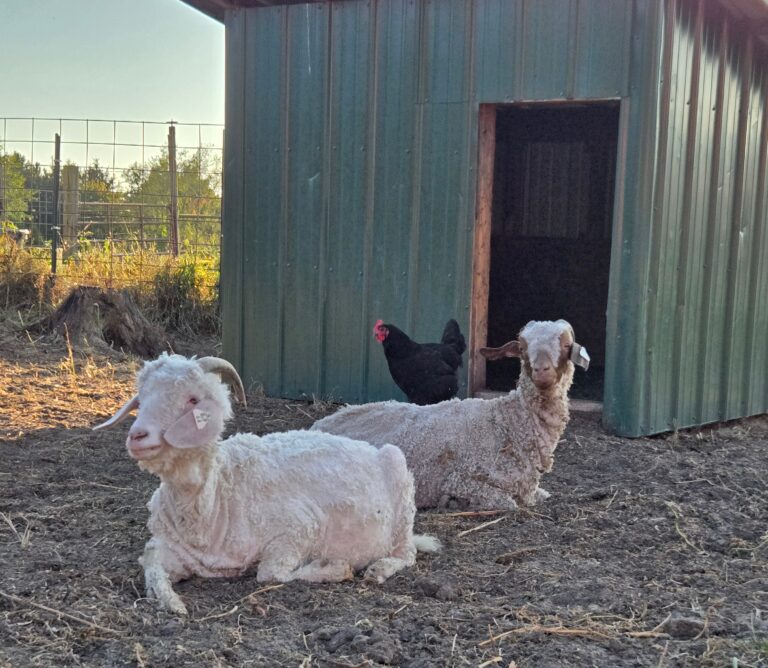
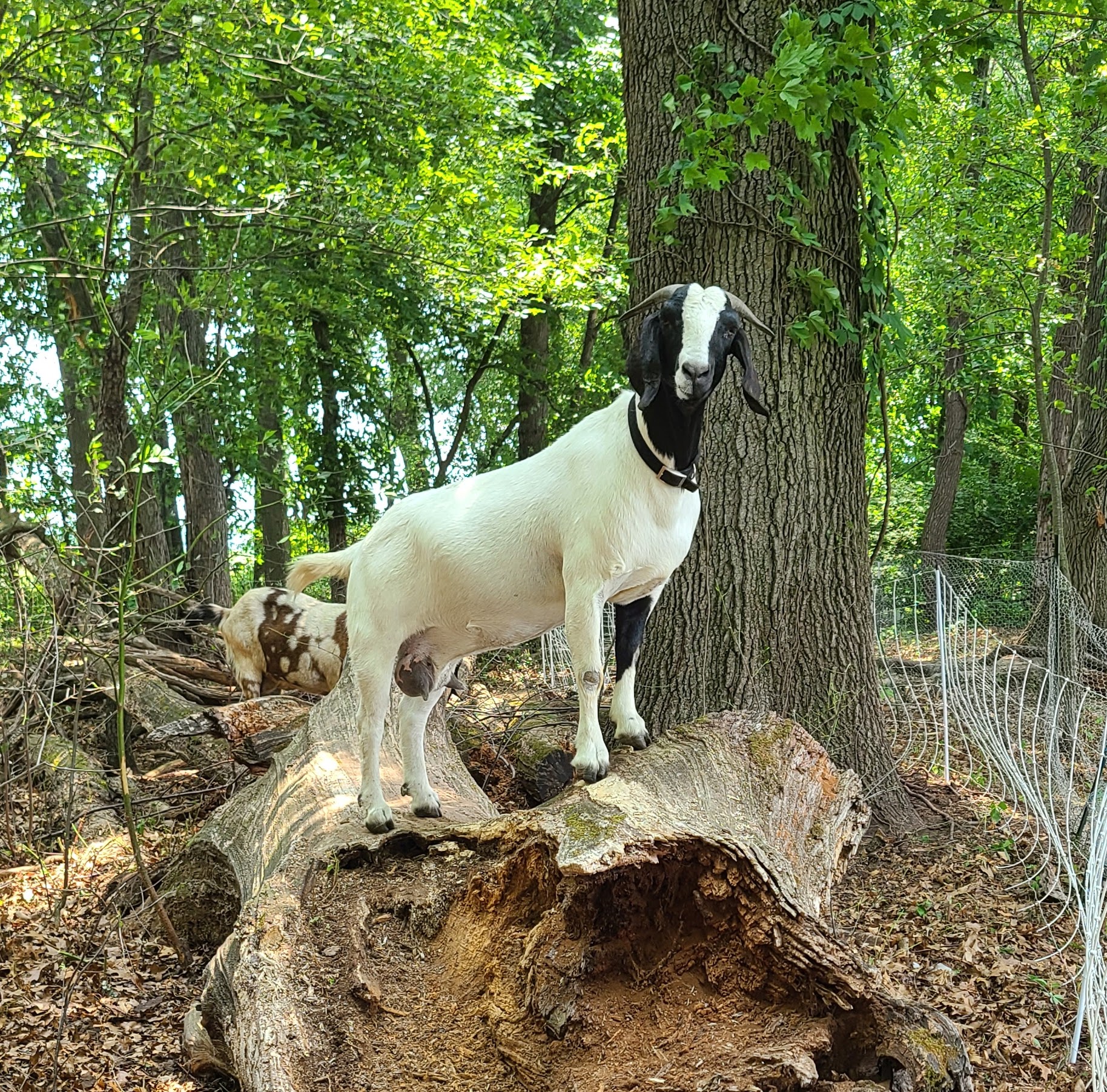
Like cattle, there are breeds of goats that have been specifically developed for meat or milk production. Common meat goat breeds include Boer, Savannah, Kiko, Spanish, and Myotonic. They are heavily muscled, fast growing, and produce healthy and delicious meat that can be used in a myriad of ways, just like beef!
While the idea of raising goats for meat or eating goat meat may be new to you, it is commonplace all over the world. Goat meat is regularly utilized in Caribbean, Middle Eastern, Mexican, and Indian cuisine and its popularity in the United States is on the rise.
Goat is the New Beef
Our family has been raising meat goats and eating goat meat for years. We have also raised our share of cattle. We processed our last steers in 2022 and have no plans to go back to producing beef. Around our dinner table, where beef used to be used for burgers, roasts, or ribs, goat has taken its place and now we actually prefer it!
Goat is the new beef for us, and it could be for you too, if you’re willing to give it a chance. One of our farm goals is to raise awareness around the use of goat as a protein option for families.
In the current climate, I also want to challenge producers to consider goats as an alternative to cattle. Raising goats for meat has several advantages in terms of land usage and capital investment.
I know saying “Goat is the new beef” is a bold statement, but it’s one that I stand behind. In the next few paragraphs, I hope to open your eyes to the possibilities of capitalizing on the utility of an underappreciated livestock animal.
1. Goats are Less Expensive to Buy than Cattle
Even before the price spike from the cattle shortage, goats were less expensive to purchase than cattle. Of course, it depends on the age, breed, and quality of the animal, but you can typically buy several goats for what it would cost to purchase one stocker or feeder calf.
2. Goats are Less Expensive to Feed than Cattle
Goats are smaller and eat less than cows. Both cattle and goats should consume approximately 2-3% of their body weight in dry matter each day. This means that each 1,000-pound steer requires roughly 20-30 pounds of feed daily, while each 100-pound goat would need 2-3 pounds of feed.
Cattle and meat goats can be raised on a grain or grass-based diet, or a combination of both. Feeding a grain-based diet to meat animals is more costly but allows them to reach market weight faster. Going the grass-fed route requires more space, land management, and time, but can be a more economical option.
We save money on feed for our goats by using our solar-powered, portable, electric netting to graze our meat goats in brushy areas in the summer instead of feeding hay. In the winter, we feed round bales, which are cheaper than square bales. We also buy our grain in bulk from a mill instead of by the bag at a retail outlet.
3. Goats Require Less Space than Cattle
Due to their size and grazing habits, goats require less space than cattle. When considering how many animals a pasture can support, “animal units” are typically used. Each 1,000-pound cow is equivalent to one animal unit and requires about 2 acres of pasture. Meanwhile, 5-7 goats are approximately equal to one animal unit and require only one acre of pasture.
This means that the stocking rate for goats is potentially twice that of cattle. Therefore, one well-managed and healthy 2-acre pasture could feed one steer or up to 14 meat goats. Of course, stocking rates are dependent on the carrying capacity of the land which varies based on the climate, soil health, and types of vegetation present.
Raising goats for meat can be a way for people to produce their own home-grown food, even with limited acreage.
4. Goats Utilize Pasture Better than Cattle
Cattle are considered grazers, preferring grasses to other types of forage. Goats, on the other hand, are considered browsers, eating a wider range of grasses, broad-leaf plants, woody stems, and weeds. This is part of what allows for goats to have a higher stocking rate. For more on using goats for brush management, click here to read my other article.
If you have less than ideal pastureland, with densely wooded or overgrown areas, raising goats for meat may be a great option because they can help manage these plants and convert nonproductive parts of your farm into saleable protein!
5. Goats Require Less Expensive Infrastructure than Cattle
Infrastructure on a farm includes fencing, animal shelters, storage facilities, machinery, and equipment. If you’re raising cattle, you will find a large barn, grain bin, tractor, and handling system come in handy, all of which are quite costly!
While you will spend more on a goat-proof fence than one that will keep cows in, a goat farm set-up will cost you less. Instead of spending tens of thousands of dollars building a barn, meat goats can utilize calf hutches or small three-sided shelters. Instead of spending a few thousand dollars on a handling system, a simple goat stanchion works for hoof trimming and medication administration.
6. Goat Manure is Easier to Manage than Cow Manure
If you’re going to raise animals, you are going to have to deal with manure, so let’s talk about it! Goat manure is easier to manage because it comes out in small pellets that are naturally dispersed and break down quickly if left. It makes great fertilizer too! A huge bonus is that it is considered a “cold” manure which doesn’t require composting before application to plants.
Conversely, cow manure is large, wet, and heavy. It takes time to break down naturally so instead, it is often collected, stored, and even treated before being used as fertilizer.
7. Goats Reach Market Weight Faster than Cattle
Market goats are typically butchered at a weight of 75 to 125 pounds, at an age of 6 to 10 months. Meanwhile, steers are butchered at a weight of 1,000 to 1,500 pounds, at an average age of 18 months (24 months or more in a grass-finished situation).
If you are looking at the time and monetary investment required to feed and care for the animals, raising goats for meat has a quicker turnaround. We breed our goats so that they are born early in the year and are ready to butcher before winter.
8. Goats Reach Reproductive Age Earlier than Cattle
A male goat, or buck, reaches sexual maturity between 7 and 10 months of age and can be successfully used for servicing does. Similarly, a doe (female goat) can be bred for the first time between 7 and 12 months of age, provided she has gained 75% of her mature body weight.
Cattle, on the other hand, take a little longer to reach reproductive age. Bull calves usually don’t start being used for breeding until they are at least a year old and heifers can be bred for the first time at between 13 and 15 months of age.
9. Goats Have a Shorter Gestation Period than Cattle
The gestation period of a goat is 150 days (roughly 5 months), while the gestation period of a cow is 280 days (roughly 9 months). Therefore, if your plan is to get a cow and raise her offspring for meat, just realize it will be years before that dream comes to realization. First, you have to get her bred (hopefully on the first try), care for her during 9 months of pregnancy, then feed out the calf for another year and half.
With a shorter gestation period and faster time to market weight, raising goats for meat gives you a timely return on your investment. A breeding stock meat goat doe can start paying for herself or feeding your family via her offspring within the first year. For more on breeding topics such as recognizing signs of heat, pregnancy, or stages of labor follow the corresponding links to our other articles.
10. Goats Have More Offspring at a Time than Cattle
Goats are more prolific than cattle because they usually produce multiple offspring per breeding. Twins or triplets are typical for a doe, although a singleton or quads are not uncommon. In contrast, cows usually only have one calf at a time.
Given their rate of maturity, gestation period, and litter size, goats have the potential to be much more productive over their lifetime than cattle.
11. Goats are Easier to Handle than Cattle
Due to their smaller stature, goats are easier to handle than cattle. A single person can manage most goats when it comes to providing routine care. If you want your children to get involved with livestock, they will be able to wrangle most meat goats. Another advantage is that they can be hauled in the back of a truck. We used to use our truck with a cap to transport small loads of goats, but now we have a homemade crate that fits in the truck bed. For build directions for our truck bed livestock hauler, click here!
In contrast, cattle are almost impossible to man-handle because they are so strong and heavy. Providing routine care on a mature animal often requires several skilled people or a handling system. Furthermore, transporting cattle necessitates the use of a truck and trailer.
12. Goats are Easier to Butcher at Home than Cattle
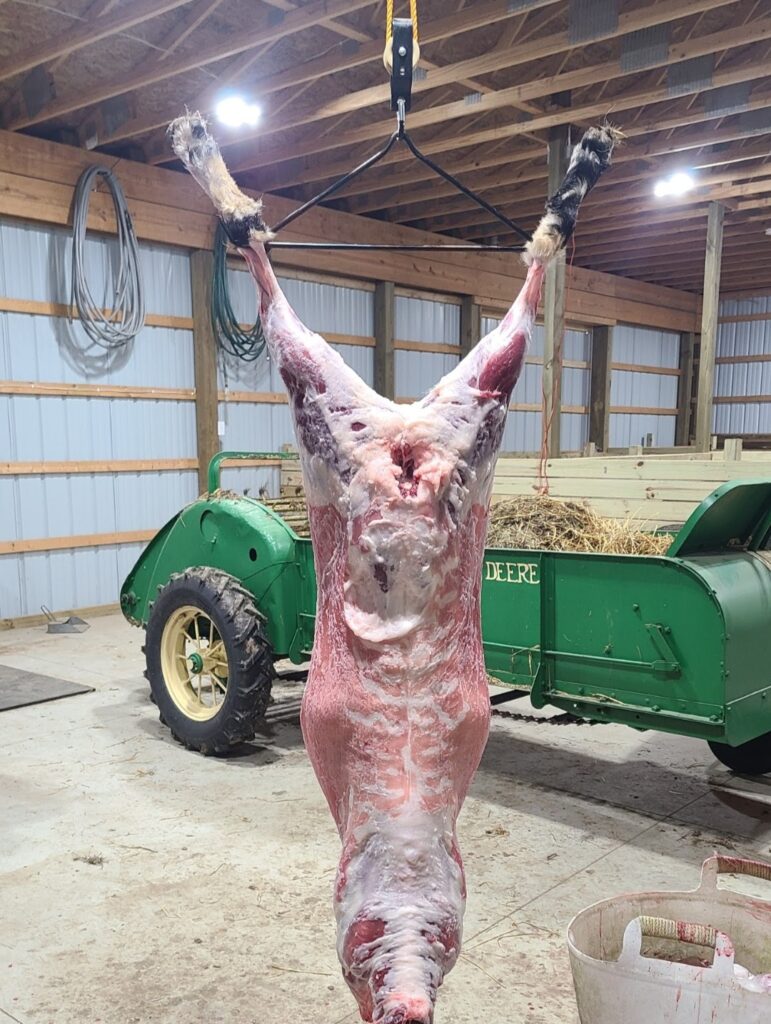
If you want to produce meat for your family and process it yourself, you will find butchering a goat is much more manageable than a steer. We have done it, but our tractor with the bucket all the way up didn’t get the steer carcasses all the way off the ground which made gutting and skinning more of a challenge. Furthermore, quartering the carcass requires either a hack saw and a lot of manpower or a chain saw. For the best flavor and tenderness, beef should be aged for several weeks, and if you don’t have a walk-in cooler like us, maintaining optimal temperature for hanging that long is nearly impossible.
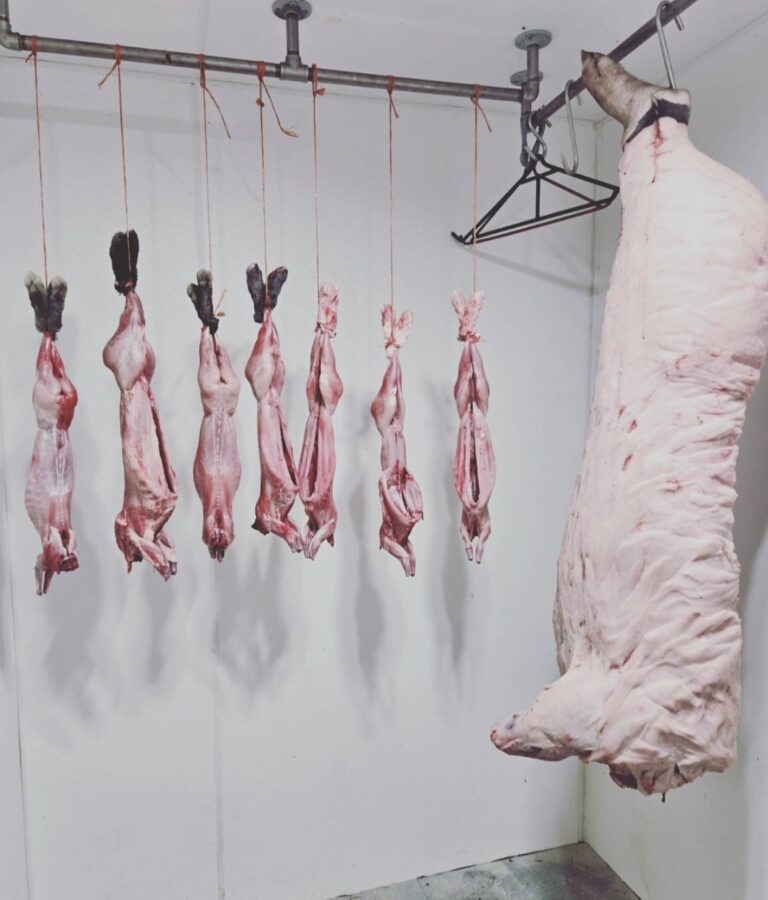
We raise goats for meat every year and process them right on our farm. One person can manage a goat carcass with ease and they don’t take nearly as long to age or cut up. For our goat cut sheet, click here.
Of course, you can take either goats or cattle to a processor and bypass the home-butchering too. We just like knowing how our animals were treated in their last moments, having control over the cuts, and options for using the waste in resourceful ways.
13. Goat Production Incurs Less Risk than Cattle Production
Due to the lower cost of animals, feed, and infrastructure, a goat farmer will have less to lose if things go wrong. Plus, being able to have a good number of meat goats, even with limited acreage, and options for selling and retaining offspring from a single goat, each loss has less of an impact on the overall success of the operation.
Since cattle are more costly to raise and beef takes more time to produce, each animal is highly valued. The loss of a single steer will have a significant economic impact on a small-scale beef farm.
14. Goat Meat is as Delicious and Nutritious as Beef
Goat meat is delectable! It has intramuscular fat like beef and is tender and juicy when prepared appropriately. It does not have a gamey taste but has a more robust flavor than beef. People often ask me if goat meat is like venison and it is not. We add fat and more seasoning when preparing venison, which is not necessary when cooking with goat meat.
Because goat meat is lower in cholesterol and fat than beef, it can be considered a healthier alternative for red meat in your diet. Goat meat also has more iron, copper, and potassium than beef.
Goat meat is as delicious and nutritious as beef and can be substituted for beef in any recipe. I use goat meat to make hamburgers, tacos, and pot roast. It is amazing in chili, curry, and stir fry. We also smoke and barbecue goat legs, ribs and chops. Cooking goat meat longer and at lower temperatures helps ensure its tenderness and palatability.
Check out our recipes for goat belly rouladen or seared goat loin medallions! I promise after trying it, you’ll be a fan.
Final Thoughts on Goat Versus Beef
Our choice to produce goat is rooted in our love of the animals and the meat. While the yield from a single goat is much less than that of a steer, raising meat goats is economical, fun, and rewarding for us.
We feel goats don’t get the consideration they deserve. Especially during this cattle shortage, let’s take meat goats seriously. I am by no means saying that beef no longer has a place at the table, however, at a time when the beef industry could use a helping hand, consider goats as a viable supplement and/ or replacement.