8 Reasons to Keep a Rooster in Your Flock

If you have a flock of laying hens in your backyard, consider keeping a rooster to accompany them. A rooster is not just another pretty bird to feed; he can serve several purposes on your farm. Learn the reasons we love having at least one rooster in our flock of chickens.
This post contains affiliate links. As an Amazon Associate, I earn from qualifying purchases.
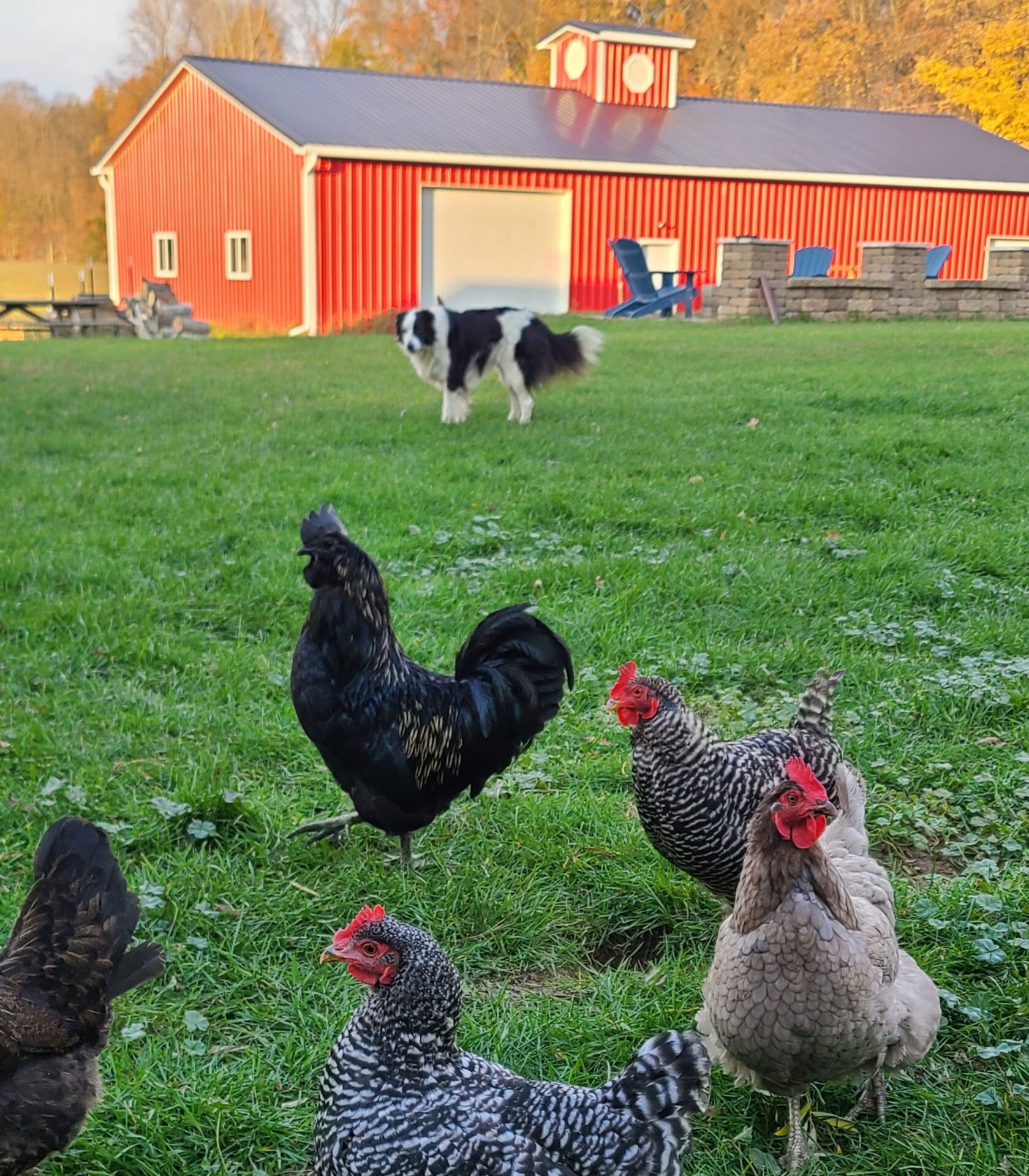
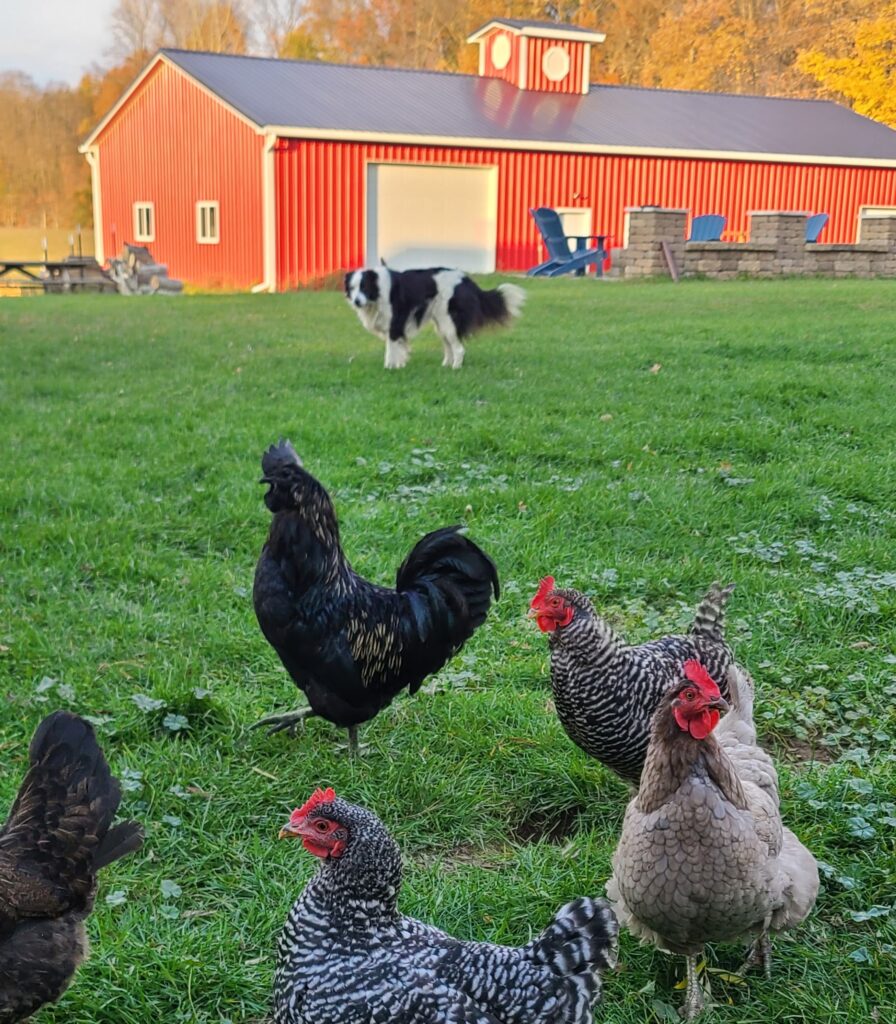
We have the most beautiful, attentive, docile, fibro-melanistic rooster that we call Jack Black. He’s not just a pretty face though, he serves several purposes here on the farm.
We have a flock of 36 dual-purpose chickens that free-range during the day and are locked in the coop at night. Jack Black is their king. He rules the roost with a calm, but firm hand and oversees the safety of the flock and even coexists with the rooster (one of his sons).
Here are the reasons we keep his kind around!
1. Roosters Help Ensure Flock Safety
A good rooster is the watchman for the flock. He will keep his eyes peeled for danger and sound the alarm if necessary to keep all the chickens safe. Our rooster usually scopes out a foraging area and leads the way around the yard.
While the hens are busy with their heads down digging for bugs and worms, he stands guard, scanning the sky and periphery for anything that looks threatening.
2. Roosters Fight to Protect the Flock
In addition to standing guard, a noble rooster will go to battle to protect his hens from a predator. I have seen our rooster engage dogs and a hawk that was trying to get a hen.
Armed with greater size and sharp spurs, he is a formidable force to be reckoned with. He may even be willing to sacrifice himself for the flock he is charged with protecting.
3. Roosters Provide for the Hens
Roosters are selfless providers for their hens. If he finds a good source of food, he will call the hens over to eat first. You may even see your rooster perform an act called “tidbitting.”
Tidbitting is characterized by one bird presenting small bits of food to another bird. Mother hens do this for their chicks and roosters do it for hens. If you give your chickens treats, you may see your rooster offer a morsel to a special hen.
It looks like they are giving a gift and it’s cute to watch!
4. Roosters Keep the Peace
Hens have a hierarchy, or pecking order, and the rooster is not really a part of it. I often see roosters mediating spats between hens.
If you have more than one rooster though, they will fight amongst themselves to determine dominance. The head rooster will have first pick of the hens and maintain the peace, as long as the other rooster doesn’t forget his place.
5. Roosters Fertilize Eggs
Your hens don’t need a rooster to lay eggs, but if you want to hatch your own chicks you need him for egg fertilization. Roosters will mate with several hens every day, so many of your eggs may be fertilized.
If you don’t want to hatch any chicks, you can eat those fertilized eggs, just make sure you collect them daily before development progresses. For more on washing and storing farm fresh eggs, click here to read our other article.
6. Roosters Add Beauty to your Flock
Like many other species of birds, the male chicken is the most colorful and beautiful to look at. Roosters add some flair to your backyard flock.
I like having different colored chickens to watch from my windows. The rooster is a favorite to see as the sun catches the green in his hackle, saddle, and long sickle feathers.
7. Roosters Wake You Up in the Morning
A rooster will start crowing at dawn and make a nice, musical alarm clock for the farmstead. They continue crowing throughout the day.
If you don’t like being awakened by the sound of a rooster, maybe this isn’t a benefit, but we don’t mind it.
8. Roosters Taste Good
If it’s time for your rooster to go, his last act can be feeding your family. Being larger than the hens, roosters make an ample chicken dinner. Slow cooking an old rooster can help make the meat more tender.
Drawbacks to Having Roosters
Although I just explained why we love our roosters, keeping some can be problematic. One potential issue is that they can be rough on the hens and leave them with sores or feather loss from aggressive breeding.
Another drawback is that some roosters are or become aggressive towards people. If your rooster is beating up your hens, or attacking you (or your kids), it’s probably a personality trait that you won’t be able to change.
Finding a rooster with a good temperament and instincts is key!