15 Signs of Labor in Goats

If you have a pregnant doe and want to be around to witness the birth of her kids, here are some signs of labor in goats to look for to gauge how close she is to delivering. Learn about the stages of labor in goats and what to expect in pre-labor, active labor, and post-labor.
This post contains affiliate links. As an Amazon Associate, I earn from qualifying purchases.
Kidding season is a very exciting time on the farm! Even after more than 30 years of raising goats, welcoming new life never gets old for me. Each kid is special and a culmination of months of planning and preparation.
I try to be present for as many births as possible, so learning to determine how close a doe is to delivery helps me decide whether to hang out in the barn or set a timer and recheck after I complete some other tasks.
There are three stages of labor that your doe will go through: pre-labor, active labor, and post-labor. Let’s look at the signs that accompany each.
Stage 1: Pre-labor in Goats
During this stage, the pregnant doe is making preparations for delivery. Some does start showing signs weeks or days before kidding, but true pre-labor occurs several hours before giving birth. First time mothers often stay in this stage longer than veteran does.
A pregnant goat in pre-labor will exhibit more behavioral and physical changes as she nears the next stage, active labor. Your doe may not show all of these signs, but if four or more of them are present, I would make sure she is in a kidding pen. For more information on setting up a kidding pen, click here to read my other article.
1. Restlessness is a Sign of Pre-labor in Goats
A doe in pre-labor may seem restless and like she just can’t get comfortable. You may see your doe lie down and get up frequently, rub on things in her pen, turn in circles, or pace.
2. Nesting is a Sign of Pre-labor in Goats
Along with just being restless, your pregnant doe in pre-labor may start pawing the ground and building a nest in her bedding. She may dig a hole or make an indentation in the straw or shavings to lay in to give birth.
3. Behavior Change is a Sign of Pre-labor in Goats
If your pregnant doe is with other animals, she will probably isolate herself when in pre-labor. She might seek out a quiet corner of the barn for some privacy and space before giving birth. If you notice a change in your doe’s normal behavior, she might be progressing and nearing the end of her pregnancy.
4. Vocalization is a Sign of Pre-labor in Goats
Your pregnant goat may become more talkative as she gets ready to meet her little ones. She might turn toward her belly and make murmuring sounds or lie and bemoan the pain of early contractions.
My Nubians are notoriously loud and even more so when pregnant. They let everyone that comes near know how uncomfortable they are with exaggerated sighs and sad songs of late pregnancy.
5. Softening of Ligaments is a Sign of Pre-labor in Goats
The ligaments around the doe’s tailhead will soften and become almost indiscernible as she approaches delivery. These ligaments usually feel like a pencil, but as the doe’s body prepares for giving birth, they become flaccid.
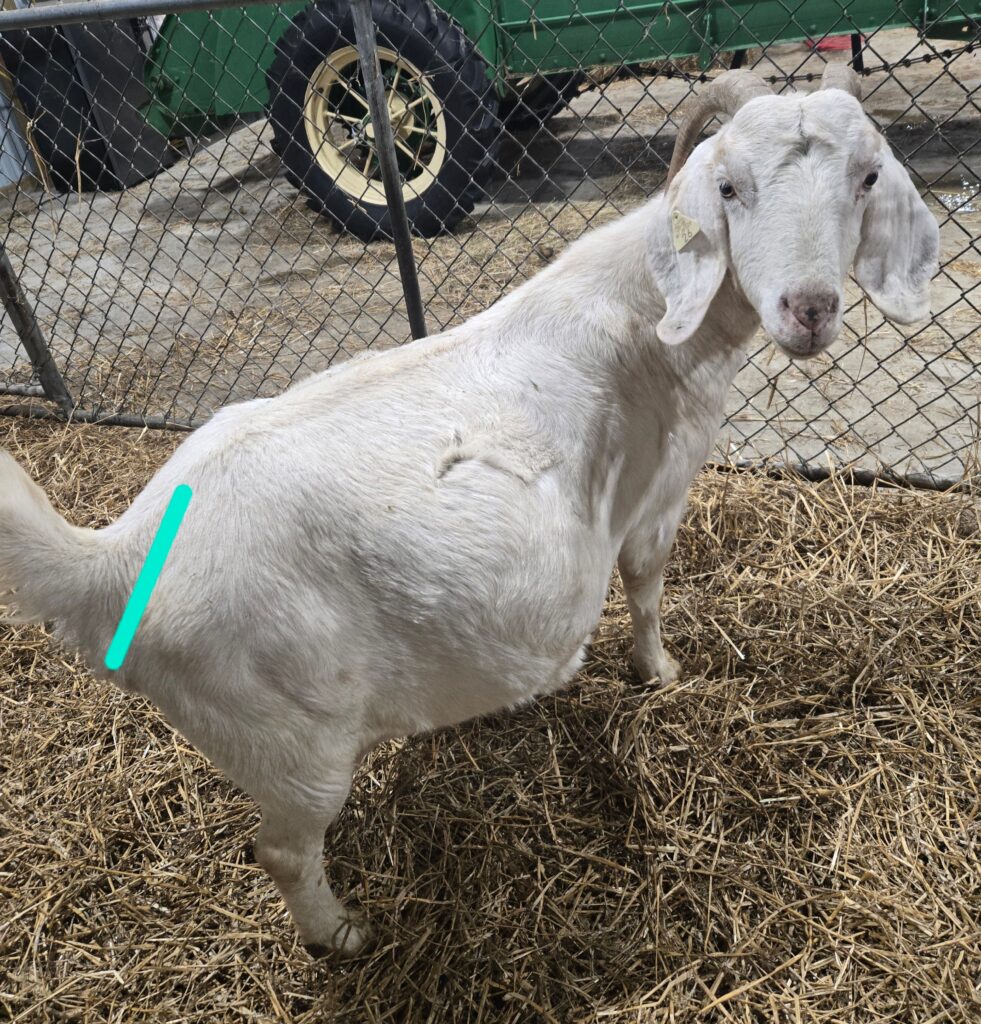
6. Softening of the Vulva is a Sign of Pre-labor in Goats
Along with ligaments, the doe’s vulva will soften during pre-labor. You might notice enlargement or swelling of the vulva along with some clear, mucus-like discharge.
The mucous plug, which can be blood-tinged, is often lost well before pre-labor, a week or two before her due date.
7. Udder Development is a Sign of Pre-labor in Goats
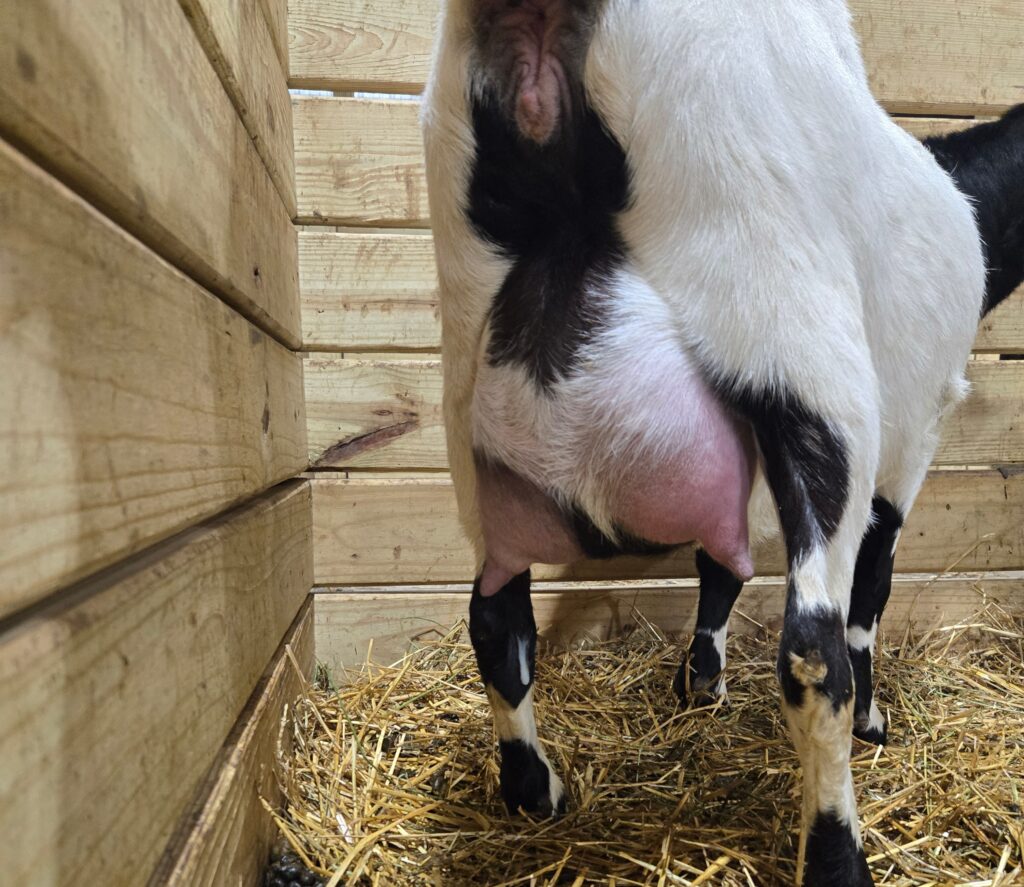
Some pregnant does start “bagging up” a month before their due date, while in others the udder doesn’t fill until right before giving birth. In preparation for feeding her babies, during pre-labor a doe’s udder will fill with colostrum and may be tight and shiny. Her teats will elongate and she may even leak milk from the orifices.
8. Going off Feed is a Sign of Pre-labor in Goats
Goats are rather gluttonous creatures and never miss a meal. If your doe doesn’t finish her breakfast or dinner, this could be an indication that she is getting ready to have her kids. If she is not interested in more than one meal, I recommend consulting with your veterinarian as going off feed can indicate an underlying issue.
9. Tail Lifting and Stretching are Signs of Pre-labor in Goats
Just like humans, goats experience Braxton Hicks contractions during pre-labor. These mini contractions help get the baby in position for birth. You probably won’t be able to notice the tightening in your doe’s abdomen when she has these types of early contractions, but if you see her lifting her tail for no reason, stretching, or arching her back, that is probably what is going on.
Stage 2: Active Labor in Goats
Once your pregnant doe reaches this stage, there is no time to wait, have your kidding kit ready and some fresh towels! If you want to know what I stock in my kidding kit, click here to read that other post.
During active labor, your doe will be pushing kids through the birth canal. This can take an hour or two for first time mothers and usually less than an hour for veteran does. If your doe is not making any apparent progress after 30 minutes of being in active labor, I would contact your veterinarian.
10. Visible Contractions are a Sign of Active Labor in Goats
In active labor, you will see your doe’s entire abdomen tightening. The contractions get closer together and more intense as labor progresses. Active labor contractions are involuntary and painful; it is normal for your doe to rest in between contractions or between birthing multiples.
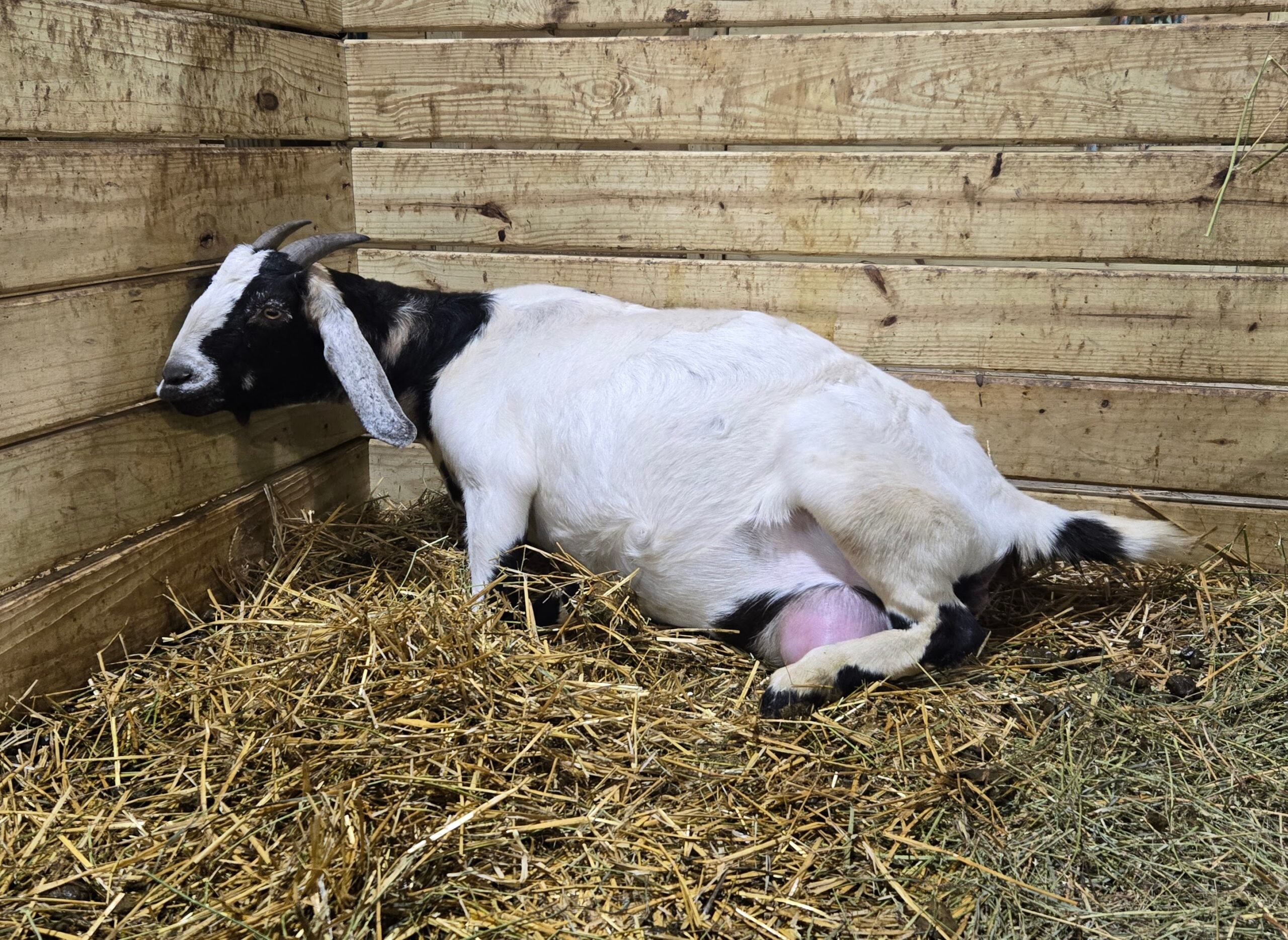
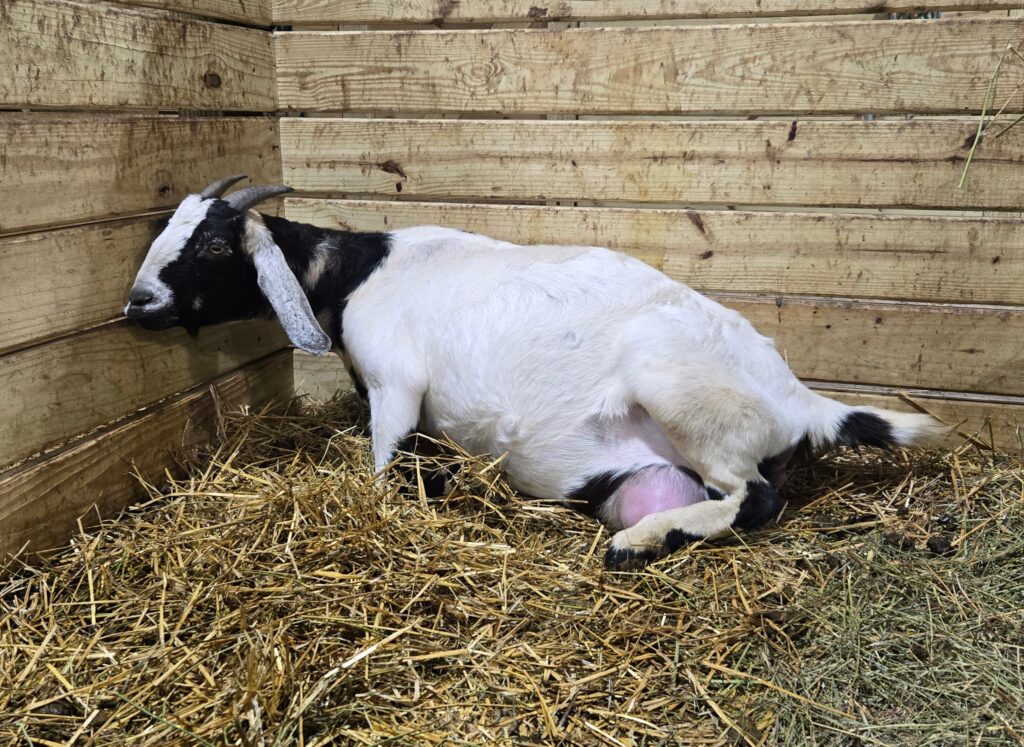
11. Squatting or Propping up on Knees are Signs of Active Labor in Goats
A doe with good maternal instincts will assume a favorable position for pushing. Some does squat and other prop themselves up on their knees from a lying position. Either of these work well because they allow gravity to work for them as they push the kid downhill through the birth canal. You can see a doe in position to push at the top of this post.
12. Pushing is a Sign of Active Labor in Goats
Your doe will have the urge to push when contractions bring the kid into the birth canal. Her whole body will engage during pushing and she may do it from a laying or standing position. While pushing, a doe may cry in pain or grunt deeply.
If the water sac does not present after 30 minutes of pushing or if the kid progresses but remains in the same position for more than 30 minutes, veterinary intervention may be required. Have the number of your vet on hand for emergencies.
13. Presentation of the Water Sac is a Sign of Active Labor in Goats
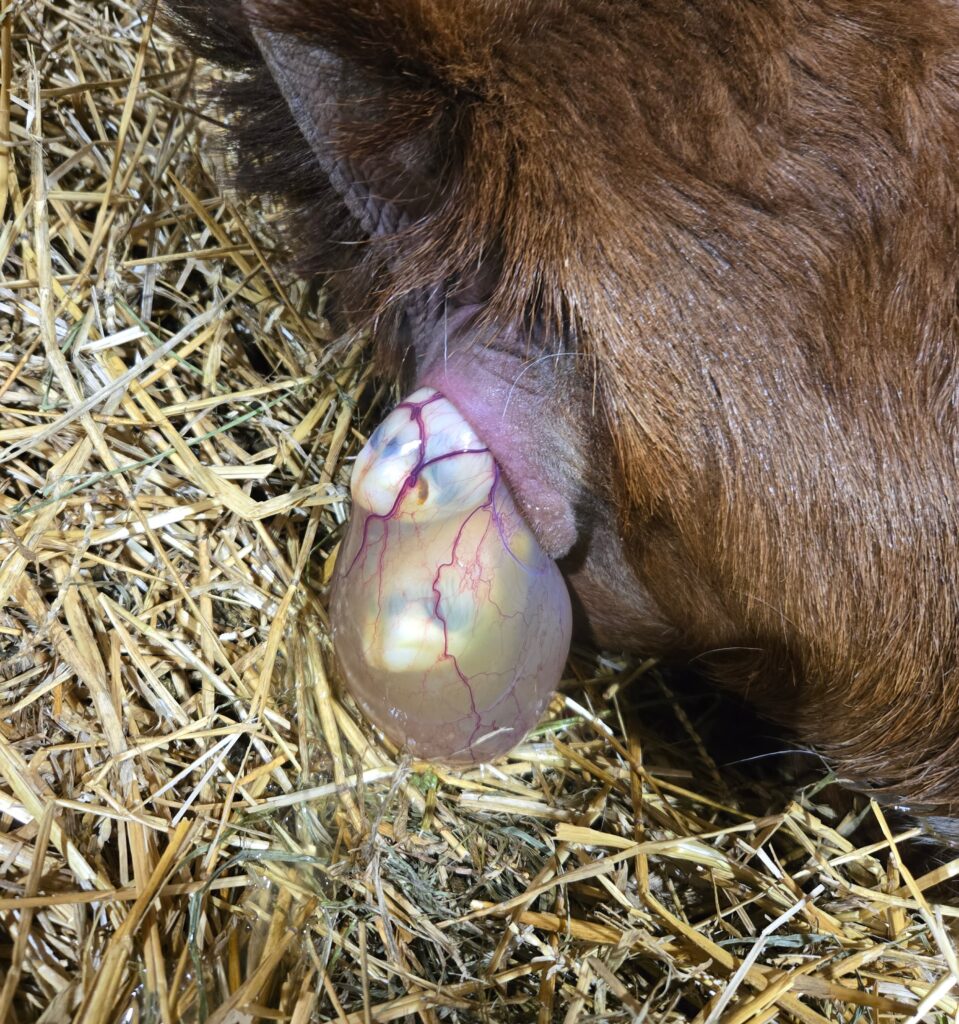
During active labor, a thick, clear mucus will exit the doe, lubricating the birth canal. This stream of fluid may hang out of the vulva and reach the ground. As labor progresses, a water sac will become apparent. It will look like a water balloon and inside you might be able to see two front hooves and a nose! This is a sign that the kid is in the ideal position for delivery.
Contractions will rupture the water sac and the kid should come out within 30 minutes of the bag of waters presenting. If your goat has multiple kids, each will have their own water sac.
14. Pain is a Sign of Active Labor in Goats
As previously mentioned, active labor is painful. Your doe may show that she is in pain by crying, grunting, yawning, or grinding her teeth. She may also press her head against you or an object in her stall to help ease her distress.
During this time, some calm reassurance and soothing pets can make your doe more comfortable. Pain medications aren’t indicated for most births, but if complications occur, your veterinarian may prescribe something post-op.
15. Licking is a Sign of Active Labor in Goats
During active labor, your doe may lick the hair on her back or belly. Some of my does obsessively lick my hands or clothing in between contractions. I think it is because they are preparing to clean and dry their babies off with their tongue and are just practicing!
Stage 3: Post-Labor in Goats
This stage starts as soon as the last kid has been delivered. During the post-labor stage, the doe’s body will continue having mild contractions until the placenta, or afterbirth, is passed. If 12 hours have elapsed and the placenta has not been expelled, it may be retained, requiring veterinarian involvement.
If you see the placenta hanging part of the way out of the vulva, do not pull on it. If you see your doe munching on the placenta, that is totally normal and can be allowed.
During this time, monitor your doe and her new kids for any issues. It is important that the kids stay warm and consume colostrum within 2 hours of birth. For my newborn goat kid health checklist, click here!