
8 Signs of Heat in Goats

If you are interested in breeding goats, knowing how to recognize when your does are in heat is helpful for planning encounters with the buck. Here are some signs of heat to watch for in female goats.
This post contains affiliate links. As an Amazon Associate, I earn from qualifying purchases.
As a goat breeder, I monitor the cycles of my does (female goats) and put them in with the desired buck (male goat) when I know they will be receptive to breeding. This helps me accurately estimate due dates for kids and be adequately prepared for their arrival.
If you are interested in breeding goats, knowing how to recognize signs of heat is essential. Here is some information about a female goat’s estrus cycle and signs to look for when determining when to expose them to a buck.
The Female Goat’s Estrus Cycle
Most doelings go into heat for the first time when they are around six months old. Although a six-month-old doeling is considered sexually mature at this time, she is not fully grown. It is not recommended that she be bred until she has reached at least 60 percent of her mature weight. This usually occurs at around one year of age.
Breeding too soon can stunt a doeling’s growth and increase the risk of birthing complications. Personally, I wait even longer and breed my first-timers when they are a year and a half old, kidding at the two year old mark.
During the breeding season, a female goat will go into heat about every 21 days. Some breeds of goats are seasonal breeders, starting to cycle late in the summer when the days get shorter and continuing until early spring. Other breeds cycle and can be bred year-round.
The fertile period (estrus) is accompanied by signs of heat and lasts only 24 to 48 hours. This is the time that you want the doe to be exposed to the buck for a successful breeding.
Your doe may not exhibit all of these signs when in heat, but if you see four or more, she is probably ready to meet her breeding partner.
1. Does in Heat are Vocal
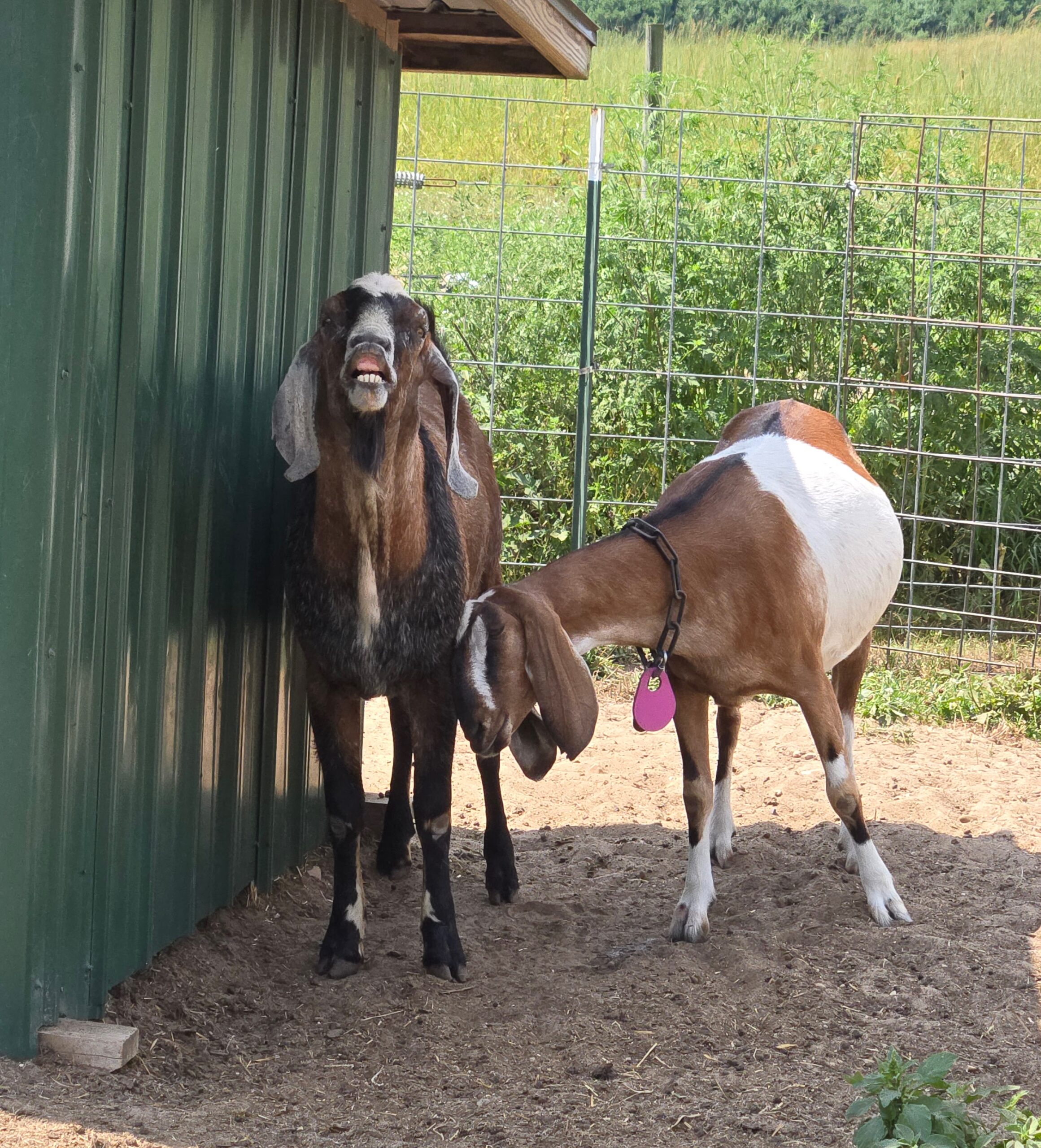
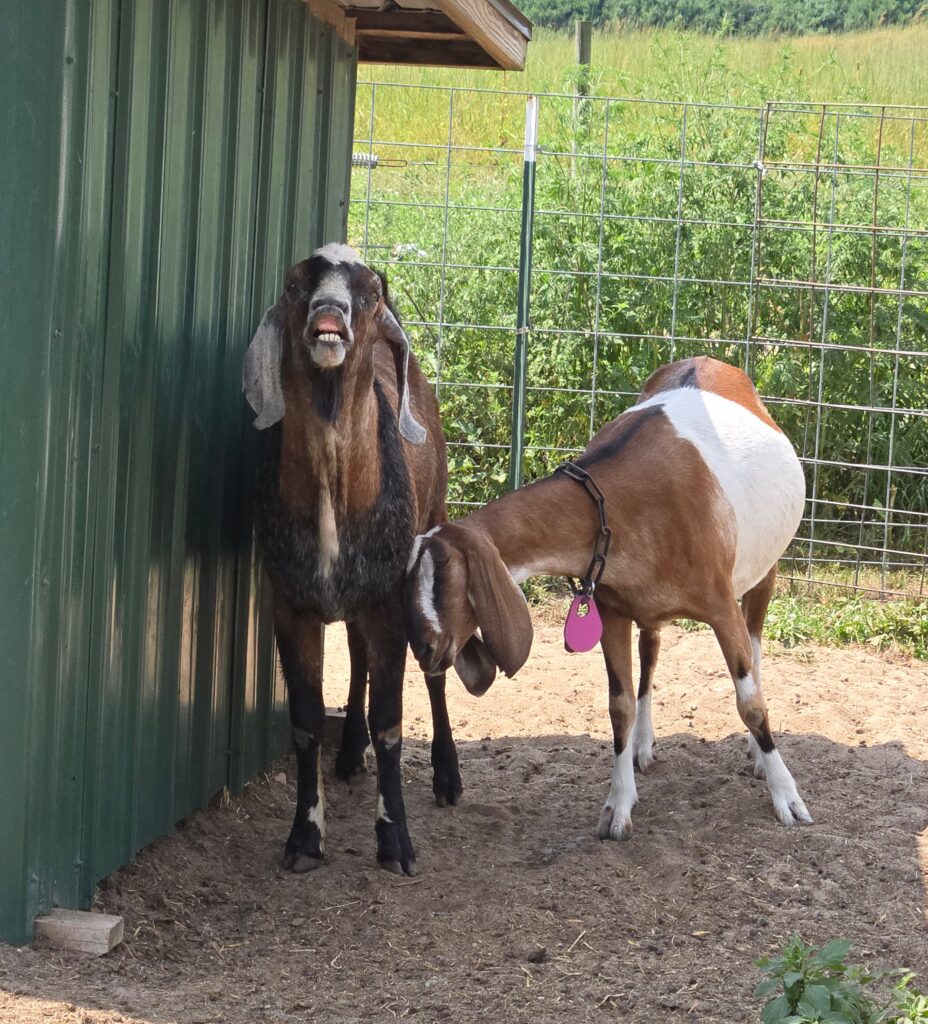
A doe in heat can be very talkative. If your doe is normally loud, there is a good chance she will be even louder when in heat. If she is normally quiet, you may be surprised to hear her calling out for a potential mate. Sometimes the love songs are soft coos and murmurs, other times desperate screams!
2. Does in Heat Experience Personality Changes
Some goats are naturally affectionate, while others are aloof. You might notice your standoffish doe becoming more personable during heat. In contrast, your attention-seeking buddy may seem preoccupied or uninterested in you when she is cycling.
3. Milk Production Drops During Heat
If you are milking your doe, you will probably notice that when in heat, she produces less milk. The good news is that she should bounce back to her normal production level once out of estrus (within 24 hours).
4. Does in Heat Act Like Bucks
You might notice some interesting behaviors amongst your does when one of them is in heat. I commonly see my does chasing and mounting each other during the breeding season before I put them in with the bucks. A doe that is currently standing for (being mounted by) another doe will likely welcome a real breeding partner if provided.
5. Does in Heat May Have Swelling and Discharge
Another way to tell if your doe is in heat is to take a look at her hind end. Slight swelling of the vulva and clear, mucus-like discharge are commonly observed during estrus.
6. Does in Heat Flag their Tails
A doe in heat will have a very active tail. Flagging or rapidly wagging her tail is a way to attract a buck and signal to him that she is ready to breed.
7. Does in Heat Take Interest in Bucks or Buck Rags
If you have a buck on your property, your doe will show a keen interest in him when in heat. She will probably hang out closest to his enclosure and tempt him with wagging and crying. Secure fencing is imperative during this time if you don’t want them to breed because does in heat and bucks around does in heat can be hard to keep in! For more on building a rut-proof buck pen, click here to read my other article.
If you don’t have your own buck, you can use a “buck rag” to help determine whether your does are in heat. You can make a buck rag by rubbing an old dish towel on a friend or mentor’s intact male goat to pick up his scent. A buck rag will elicit flagging, rubbing, and interest in does in heat. An added bonus is that you can seal the buck rag in a plastic bag and save it to use again next year (the odor is pervasive!).
8. Does in Heat will Stand for a Buck
Estrus is referred to as “standing heat.” During this time, the doe is receptive to and will stand for mounting by the buck. Of course you will still see some courtship sniffing, pawing, licking, and chasing, but the doe will not just try to evade the buck’s advances if she is truly in estrus.
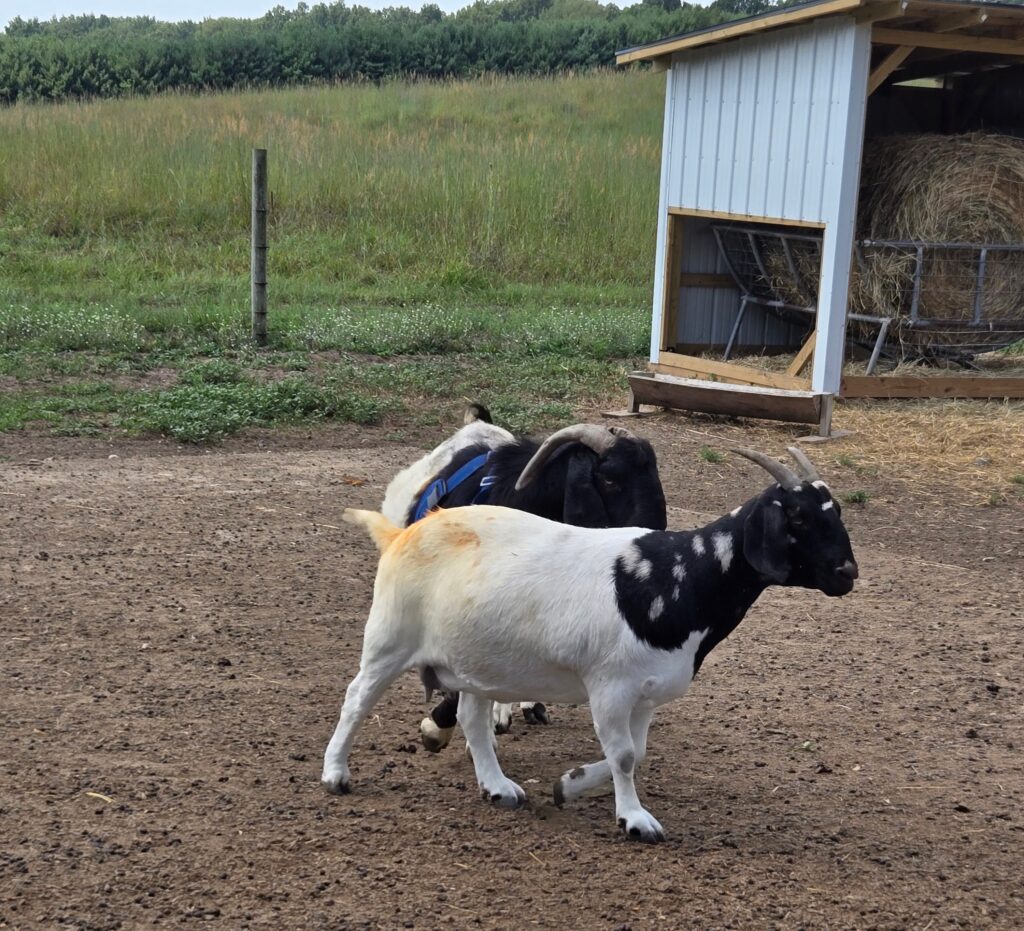
If you aren’t there to witness the deed, I recommend fitting your buck with a marking harness. Evidence of mounting will be shown by the colored mark on your doe’s back. I have the Premier 1 Deluxe Marking Harness that fits large breed goats (and sheep). It works great! You can see my Boer buck wearing the harness and the mark from an orange marking crayon on the doe in the picture below.
Do you want more information on ways to plan for and increase your chances of a successful kidding season? Check out my breeding management calendar here, it’s a free download!
Now that you can recognize heat, learn to also identify signs of pregnancy and labor in goats! Follow the links for those related articles.
For my newborn goat kid health checklist, click here!

One Comment
Comments are closed.