How to Make Compound Gin with Foraged Juniper Berries

Making compound gin is fun and easy. All you need is a neutral alcohol and some botanicals, including juniper berries. Provided are step-by-step instructions for making compound gin and two different recipes to try!
This post contains affiliate links. As an Amazon Associate, I earn from qualifying purchases.
I’m no gin connoisseur, but I do enjoy foraging and an occasional cocktail. I was intrigued to learn that I could make gin with wild foraged juniper berries and eager to give it a try.
Making compound gin is fun and easy. All you need is a neutral alcohol and some botanicals, including juniper berries. Here are the steps to make your own gin and two different recipes to try!
What is Gin?
Gin has two main ingredients, juniper berries and alcohol.
Juniper berries are the berry-like seed cones produced by certain conifer trees. Mature berries are blue in color with a dusty white coating, or bloom. Their flavor profile is complex, with an initial sweetness that is followed by a piney/peppery aftertaste.
Gin that you can buy at the store, like London Dry or Beefeater, gets its signature flavor from the berries of the Common Juniper (Juniperus communis). A milder gin can be made from the berries of the Eastern Red Cedar (Juniperus virginiana).
You can buy dried juniper berries in the spice aisle of the grocery or online. You can also forage wild juniper berries from the Common Juniper or the Eastern Red Cedar. For more information on identifying, harvesting, and drying wild juniper berries from the Eastern Red Cedar, click here to read my other article!
The alcohol used for making gin is derived from fermented grain that is then distilled. Gin can be made through a compounding or re-distillation process.
Compound Gin vs. Distilled Gin
The difference between compound gin and distilled gin is the process in which they are created. Compound gin is simply made by flavoring a neutral alcohol that has already been distilled (like vodka) with juniper berries and other botanical ingredients. Distilled gin, on the other hand, is infused with botanicals during the distillation process.
Making compound gin is easy to do at home. If you want to make distilled gin, you will need some specialized equipment.
Let’s make some compound gin!
Equipment Needed for Making Compound Gin
- Two quart-sized (32 ounce) Mason jars with lids
- Measuring cups and spoons
- Fine mesh strainer
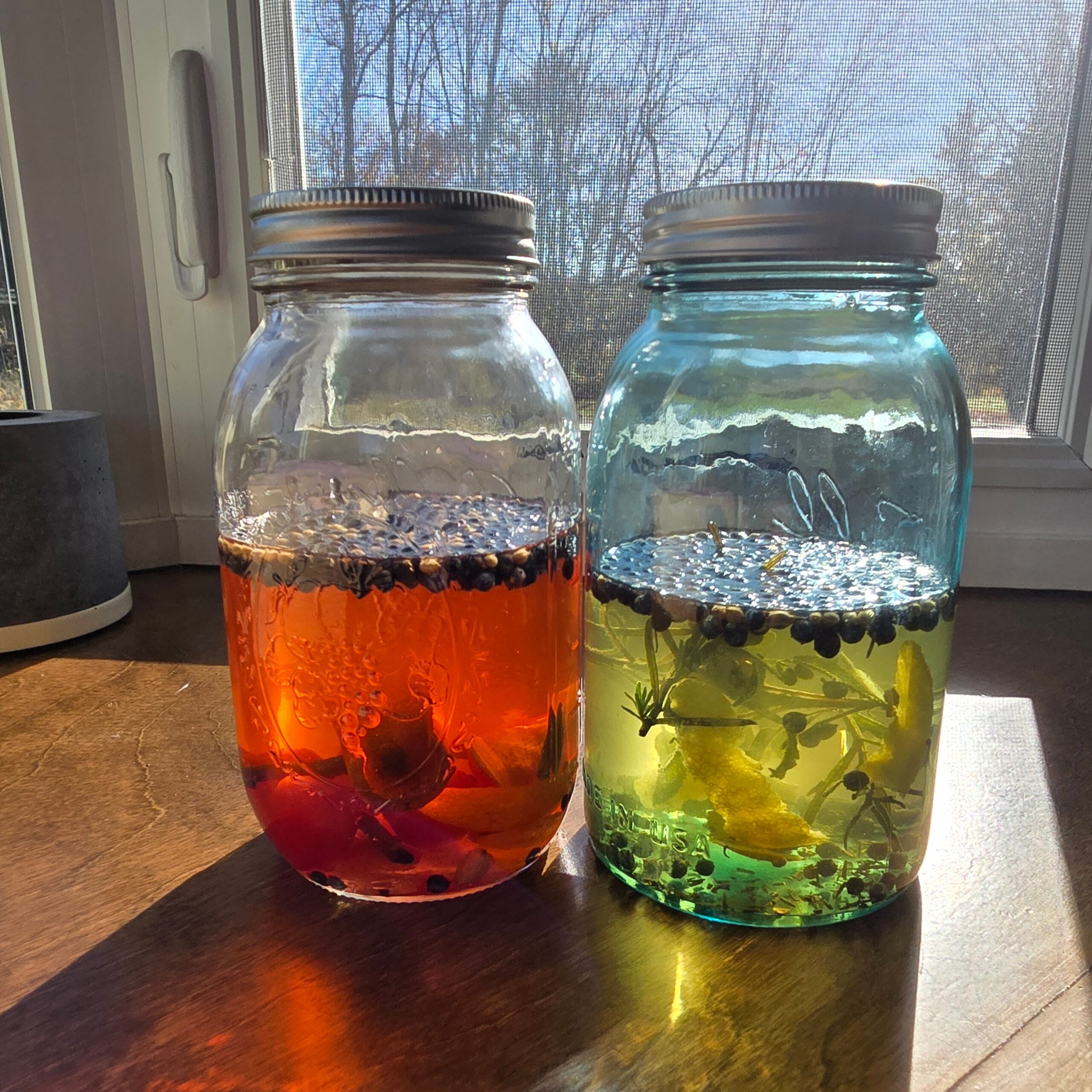
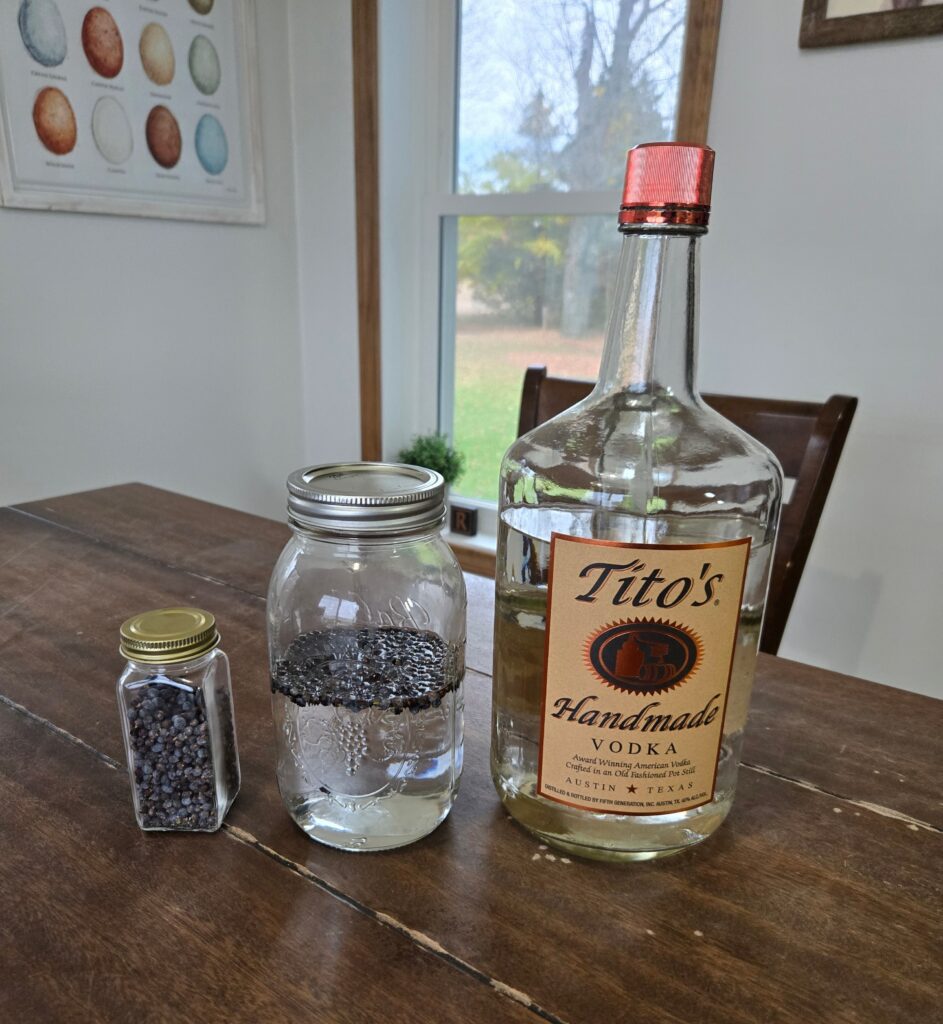
You can measure your ingredients right into the quart-sized Mason jar that you will make your gin in and let it steep. Once it is fully infused, use a fine mesh strainer to filter the gin and transfer it to another Mason jar for storage. I use the 200-mesh strainer with a funnel that I have for straining my raw goat’s milk for this purpose.
Directions for Making Compound Gin
- Combine 2 cups of 80-proof vodka and 2 tablespoons of dried juniper berries in a 32-ounce Mason jar
- Let the mixture steep for 24 hours
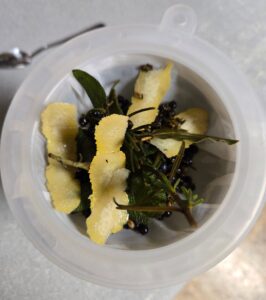
- Add ½ teaspoon coriander seed, 3 cardamom pods, and the peel of half a lemon or 1 teaspoon dried lemon peel to the mixture for a “classic gin”
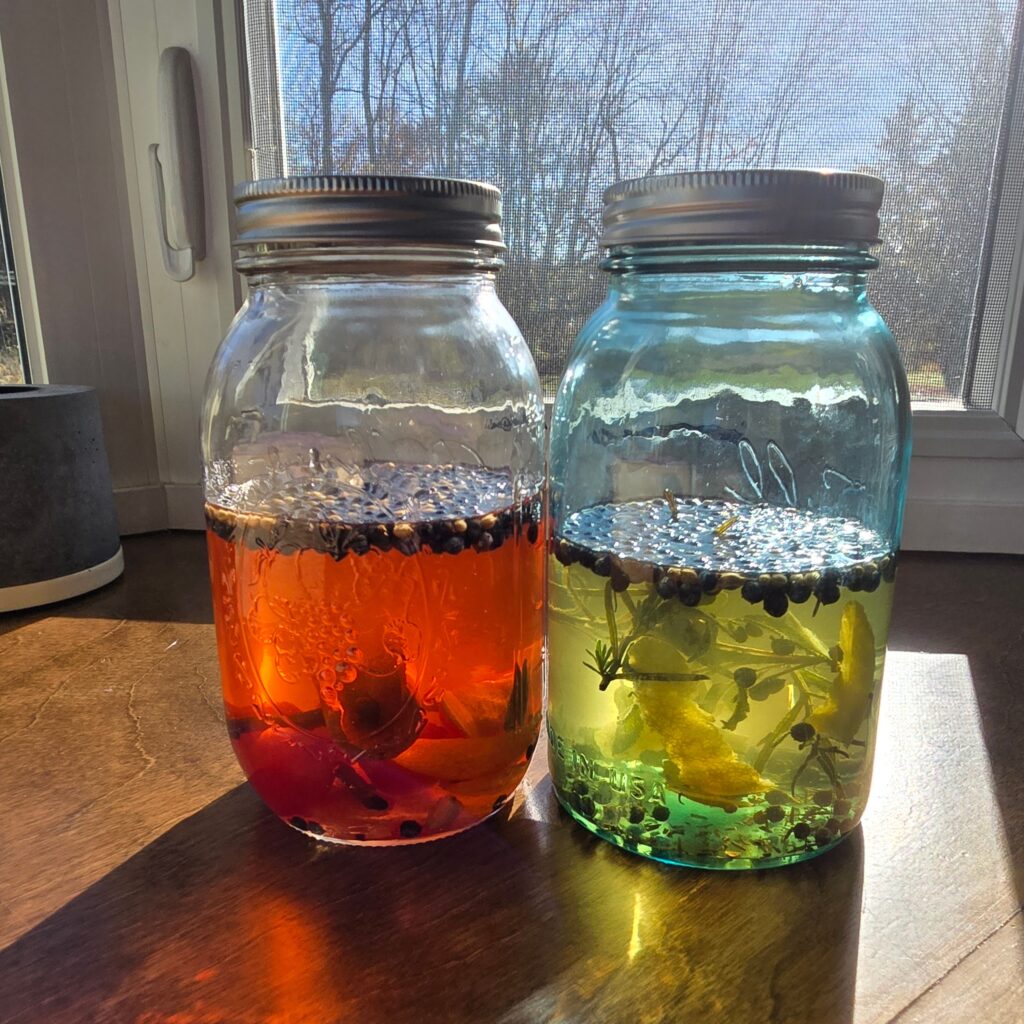
- Add additional botanicals at this time as well if you are going for a different flavor. Try my sweet Cherry Pie Gin or herbal Lavender Sage Gin recipes below!
- Let the added botanicals steep in the vodka/ juniper berry mixture for 24 hours
- Filter the botanicals from the gin using a fine mesh strainer
- Store the gin in a clean 32-ounce Mason jar
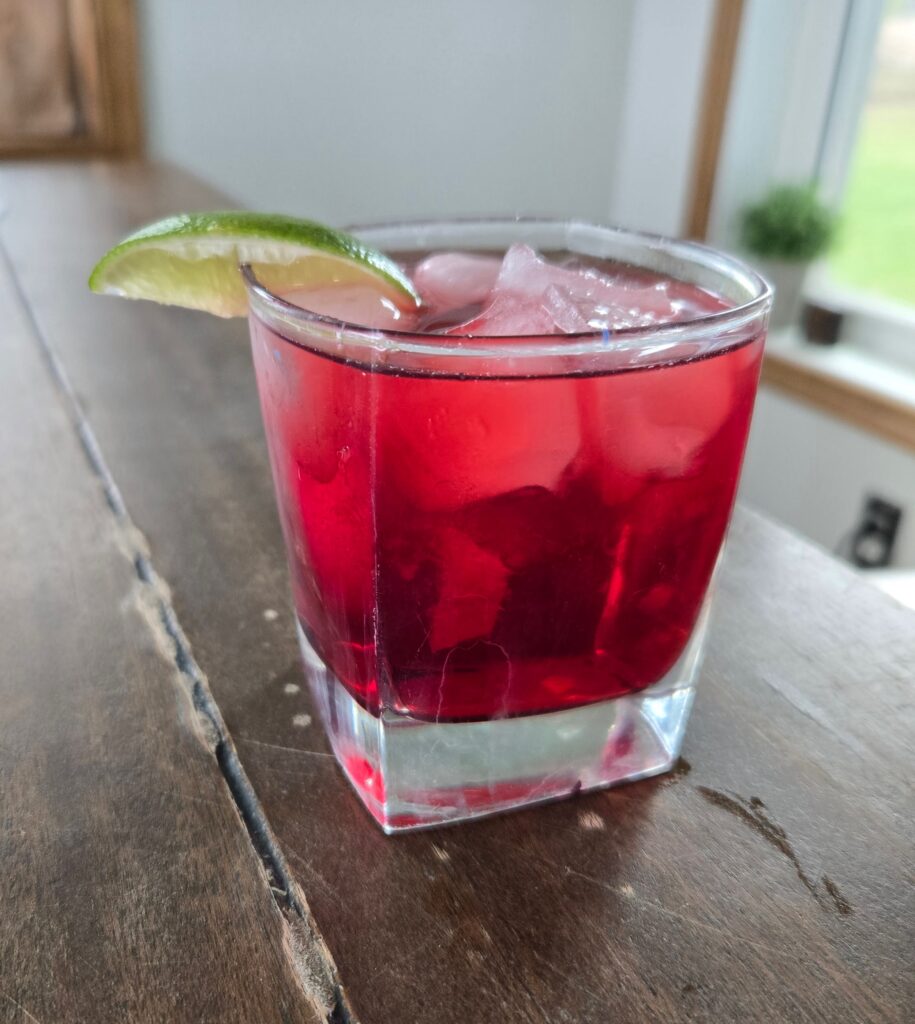
- Enjoy your gin with tonic water, club soda, cranberry juice, or lemonade!
Cherry Pie Compound Gin Recipe
- 2 cups 80-proof vodka
- 2 tablespoons dried juniper berries
- ½ teaspoon coriander seed
- 3 cardamom pods
- Peel from half of a lemon or 1 teaspoon dried lemon peel
- 1 vanilla bean
- 1 cinnamon stick
- 5 Maraschino cherries
Lavender Sage Compound Gin Recipe
- 2 cups 80-proof vodka
- 2 tablespoons dried juniper berries
- ½ teaspoon coriander seed
- 3 cardamom pods
- Peel from half of a lemon or 1 teaspoon dried lemon peel
- 1 bay leaf
- ¼ teaspoon dried rosemary
- 2 black peppercorns
- 1 sprig fresh lavender (or ¼ tsp dried lavender)
- 1 sprig fresh sage (or ¼ tsp dried sage leaves)