How to Harvest Honey from a Beehive

One of the many rewards of beekeeping is being able to harvest delicious raw honey. Outlined in this article are the steps necessary to harvest honey from a traditional Langstroth hive. A review of equipment and supplies for collecting, extracting, and bottling honey are included.

This post contains affiliate links. As an Amazon Associate, I earn from qualifying purchases.
Beekeeping definitely has some perks!
I love watching my bees, they are such resourceful, industrious, and interesting creatures. I enjoy learning about them and tending to their needs as best I can. A successful split or overwintering is a point of pride and accomplishment. Supporting the pollination of wild and farmed vegetation makes me feel like I am doing something to contribute. The cherry on top is being able to harvest and enjoy some delicious raw honey!
I live in southwest Michigan and have four traditional Langstroth beehives on the edge of my thirty-acre conservation reserve program (CRP) field. I usually harvest honey in late July and through September, as the season allows.
Here is the process and equipment that I use to harvest honey on my farm!
Equipment Needed for Harvesting Honey
- Beekeeping suit
- Smoker
- Hive tool
- Bee brush
- Rubbermaid tote for carrying frames
- Scratcher or other uncapping tool
- Honey extractor
- Honey sieve
- Large bowls or food-grade buckets
- Honey jars
I recommend wearing a full beekeeping suit and using a smoker when harvesting honey. Honeybees can be protective of their resources, and wearing a bee suit decreases the likelihood of you getting stung. Using smoke when working with bees helps keep them calm, just make sure you are burning non-toxic, natural substances such as wood, pine needles, or dried grass.
A hive tool is helpful for separating the boxes and frames in your hive. A bee brush or large feather can be used to help gently remove bees from frames of capped honey that you plan to harvest.
A large Rubbermaid tote works well for transporting frames of honey to the site of extraction. Use the lid to keep bees or unwanted pests from congregating on the frames. Plus, harvesting honey is a sticky business, and Rubbermaid totes are easy to clean!
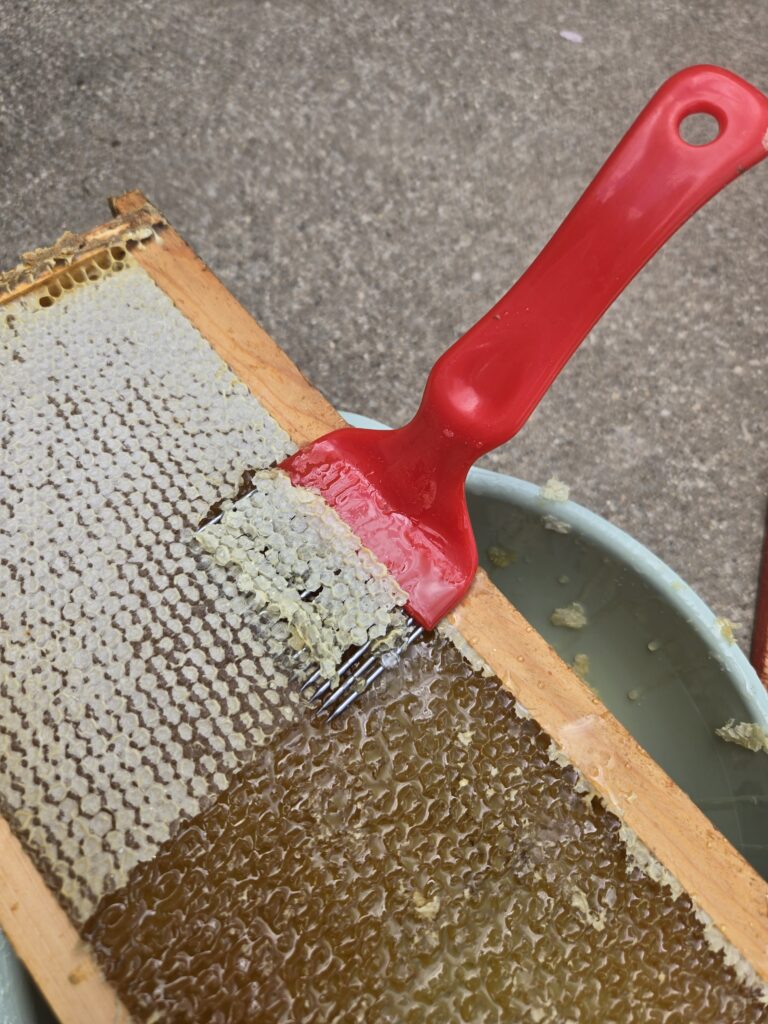
When you are ready to harvest the honey, use a scratcher or other uncapping tool to remove the outer wax covering the honey cells. Save the wax cappings to render into pure beeswax later. For a full tutorial on rendering beeswax from cappings, click here to read my other article!
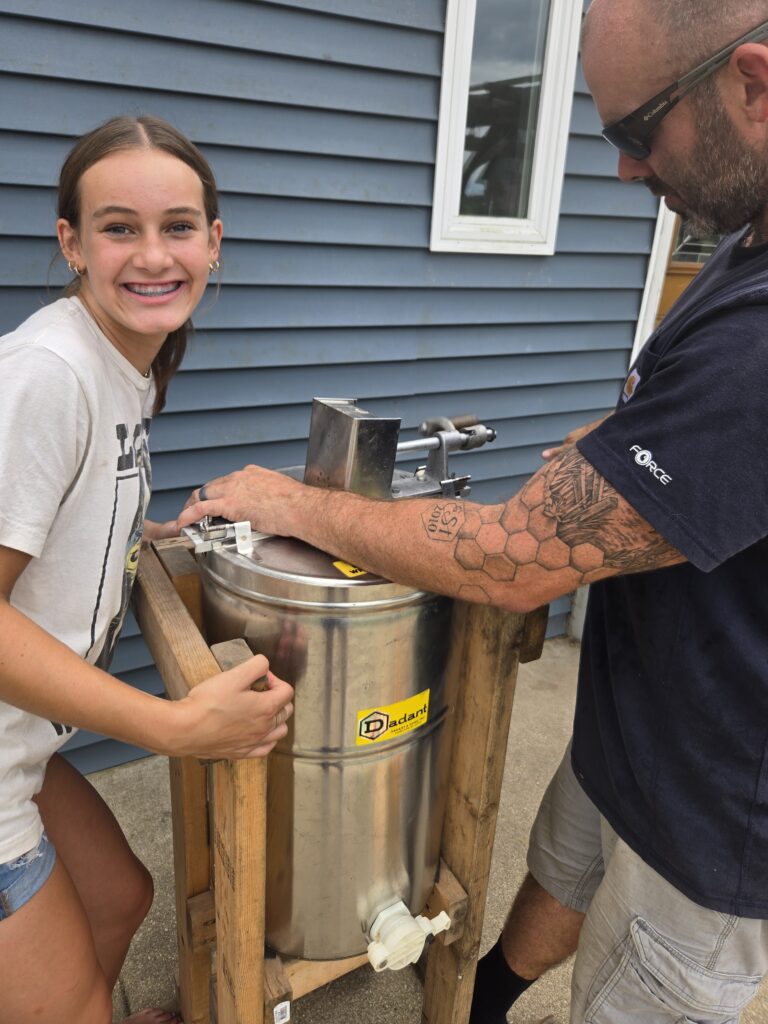
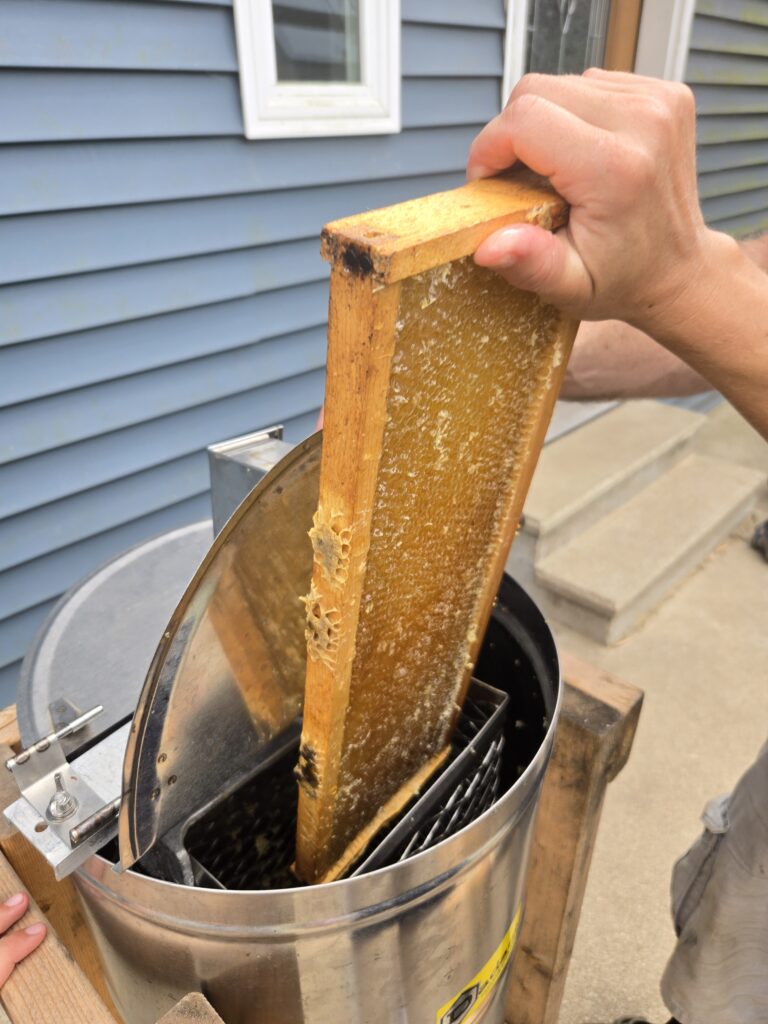
There are manual and mechanical honey extractors, but they both work by using centrifugal force to remove honey from the uncapped honeycomb. I have a two-frame hand extractor made by Dadant that I really love. Our extractor came with a homemade wooden stand, but some come with attachable legs. Having an extra set of hands to hold the extractor in place while spinning out the frames is helpful.
If you want to save the wax that is mixed with the extracted honey, you can use a honey sieve to filter it out. It will also catch dead bees and other foreign material that you don’t want to end up in your honey.
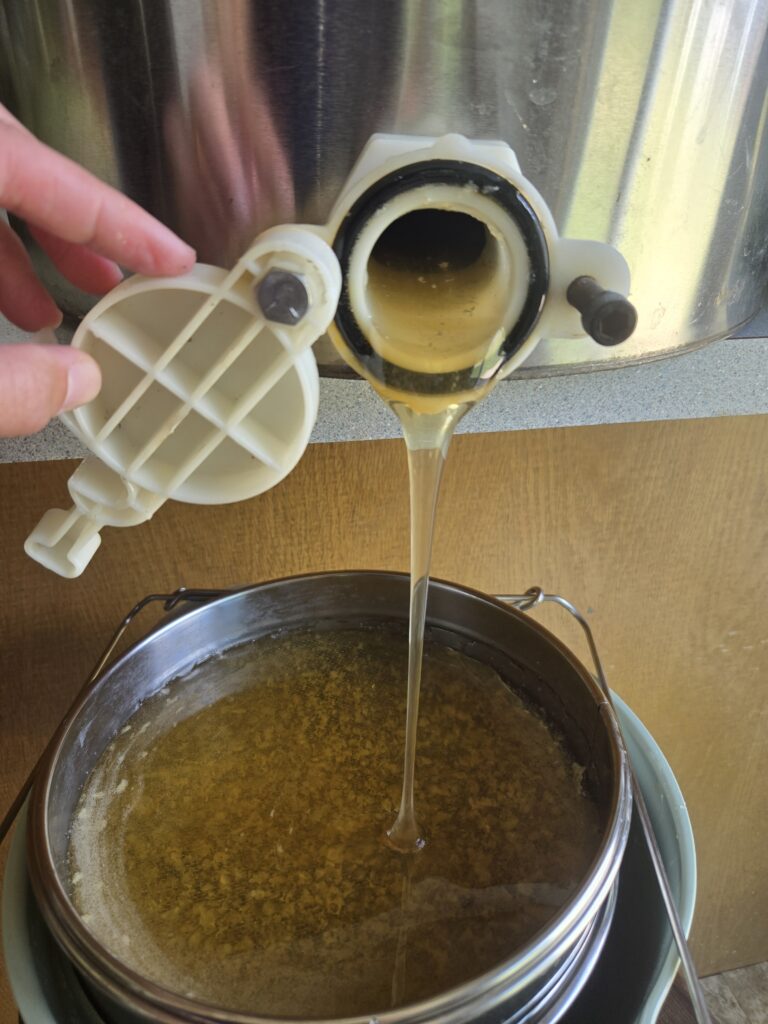
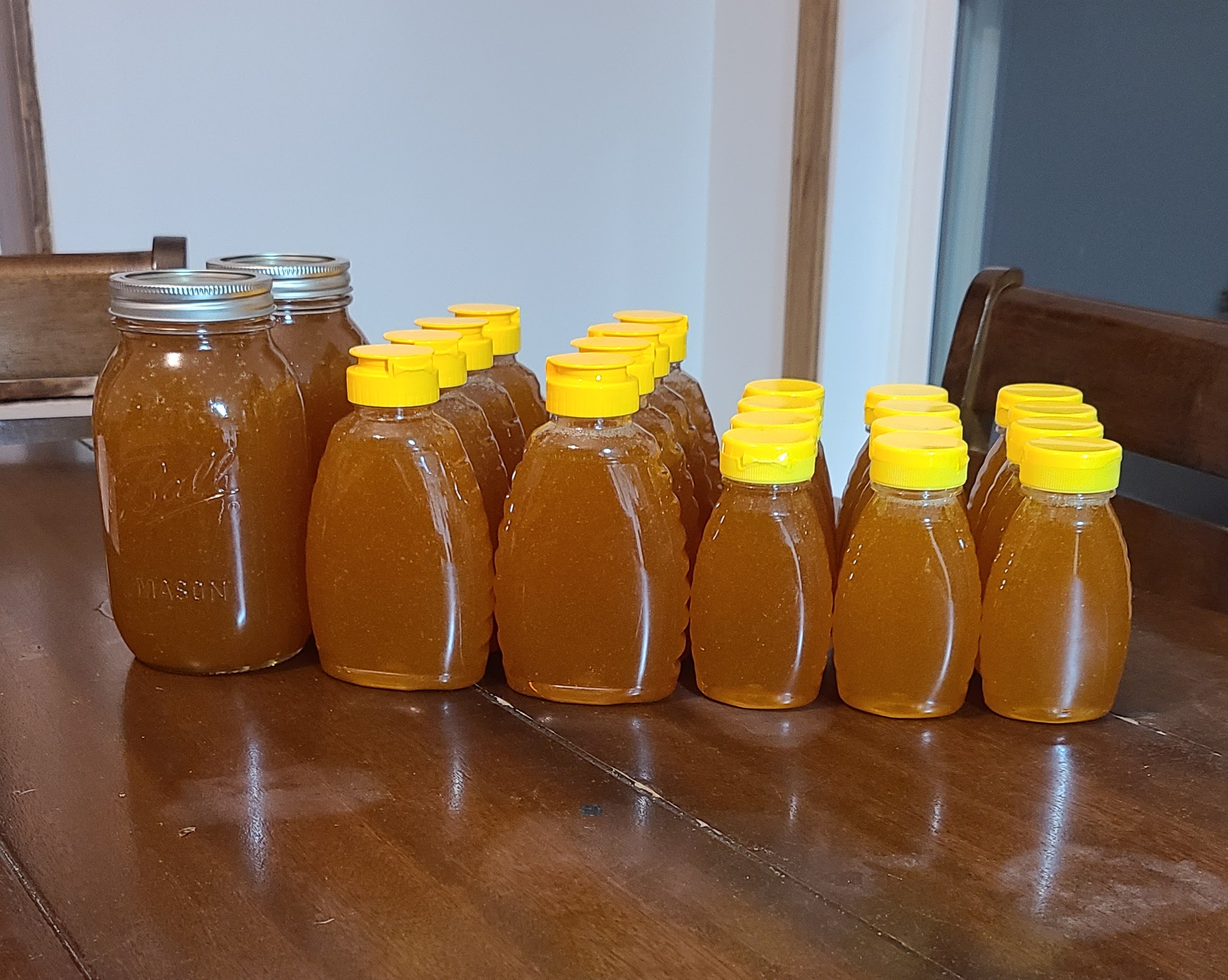
You can keep your fresh honey in large bowls or food-grade buckets until you are ready to bottle it. I have used plastic bottles as well as glass jars for storing honey.
Directions for Harvesting Honey
- Light your smoker, don your bee suit, and head out to your hives with a hive tool, bee brush, and empty Rubbermaid tote.
- Examine each frame in the honey super. Select frames for harvesting that are completely capped or almost completely capped with wax.
- Gently brush the selected frames to remove bees and place them in the Rubbermaid tote. Affix lid to keep bees and other pests out.
- Transport the Rubbermaid tote to where you want to extract honey.
- Set up your honey extractor and gather the rest of your supplies.
- Using a scratcher or other uncapping tool, remove the outer layer of wax from one side of two different frames and save it in a bowl.
- Load each frame into one of the baskets of the honey extractor, the longer top bar of the frame should go to the right and the uncapped side should be facing out (toward the wall of the extractor).
- Place the honey sieve on top of a clean, food-grade bucket and situate it under the honey gate of the extractor.
- Open the honey gate and close the top lids of the extractor.
- Begin cranking the handle of the extractor. Build up speed gradually and after a few minutes, let the extractor come to rest.
- Open the top and check the frames to make sure all the honey has been removed from the cells. If there is still some to remove, keep spinning.
- Remove the frames from the extractor and uncap the other side of each.
- Reload them into the extractor (the opposite side will be facing out this time) and repeat steps #10-11.
- Continue this process until all frames have been extracted.
- After removing the last two frames, tip the honey extractor so that the last drops of honey leave the honey gate and make it into your sieve and bucket.
- While your sieve slowly filters the last of the harvested honey, you can clean your extractor with hot, soapy water. I use Dawn and a clean dish towel to dry the extractor after washing.
- It is recommended to let the freshly harvested honey sit for a day or two before bottling to let the air bubbles dissipate.
- Once that time has elapsed, you are ready to put the honey into clean (and dry) plastic or glass jars. A bottling tank with a honey gate is helpful, or you can use a simple funnel or ladle to fill your containers.
- Bottling honey is a messy job, but everything cleans up easily with warm water. Give your jars a quick wipe before adding labels.
Additional Considerations for Freshly Harvested Honey
If you are considering sharing your freshly harvested honey with others, make sure it is labeled as honey, with the weight identified, as well as your contact information.
You can also purchase pre-printed labels with nutritional information, notes about granulation (which occurs normally over time), or warnings that honey should not be given to children under the age of one.
Reliquefying granulated honey is easy, just place the jar into warm water. You can eat granulated honey or use it to make whipped honey too. For my recipe and directions to make whipped honey, click here!
When handled and stored properly, raw honey has an indefinite shelf life. This means that it never goes bad! The best way to store honey is in an airtight container in a cool, dark place.